Viswema
The warrior village on the ridge
At a Glance
Where warriors
built a home
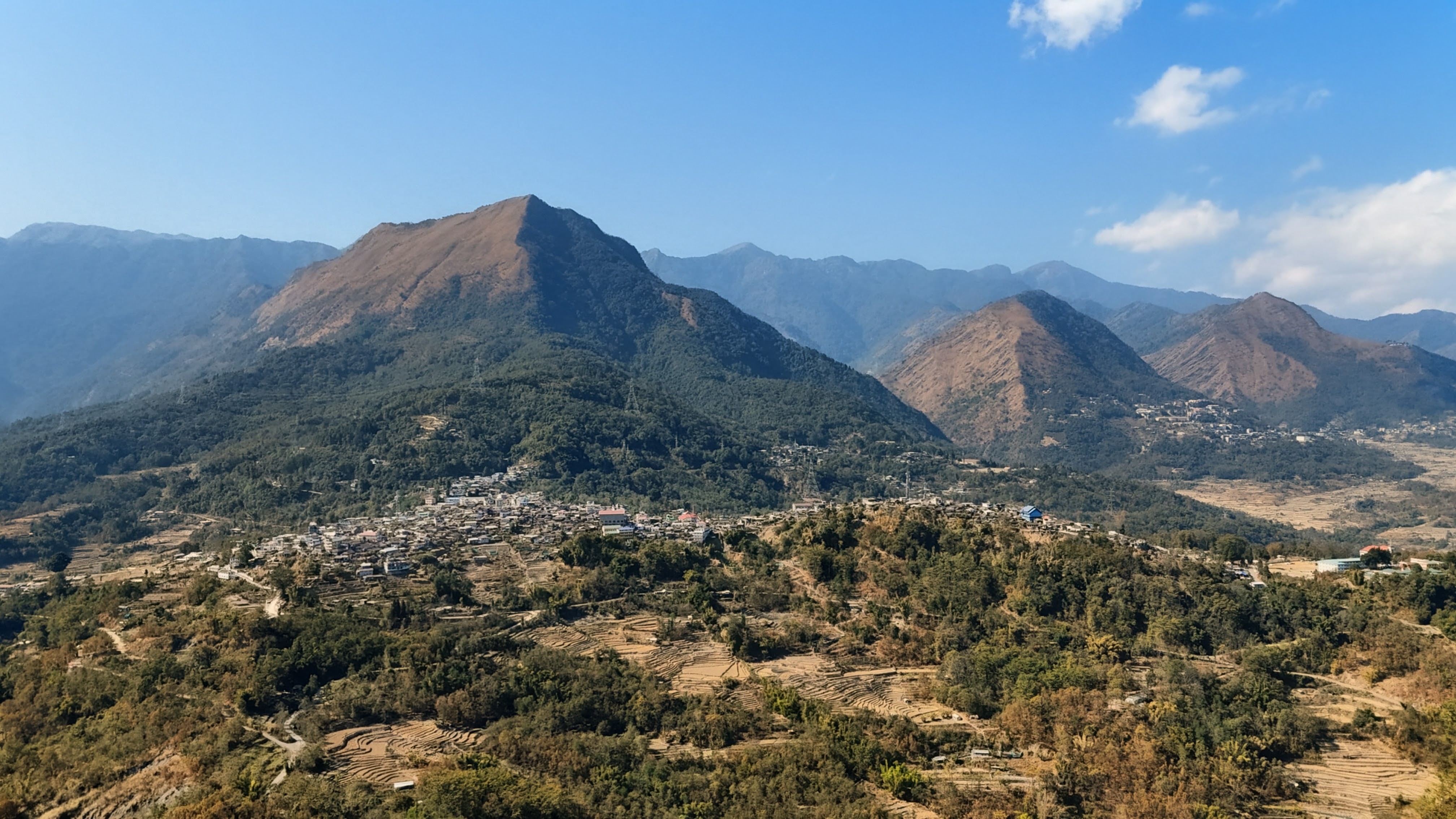
Viswema is one of the oldest and largest Angami Naga villages in Nagaland, perched along a mountain ridge south of Kohima. Known for its fierce warrior heritage and legendary battles, the village stretches across terraced hillsides where centuries of tradition still shape daily life, from communal farming to festivals that honour the land and its people.
Elevation
1,637m
District
Kohima
Tribe
Angami Naga
From Kohima
~20 km
Geography & Landscape
A ridge between
earth and sky
The Terraces
Generations of farmers carved these terraces by hand, cutting each step into the hillside with hoes and patience. Mountain springs feed the paddies, and gravity carries the water from the highest cut down to the lowest, a system that needs no pumps, only careful tending season after season.
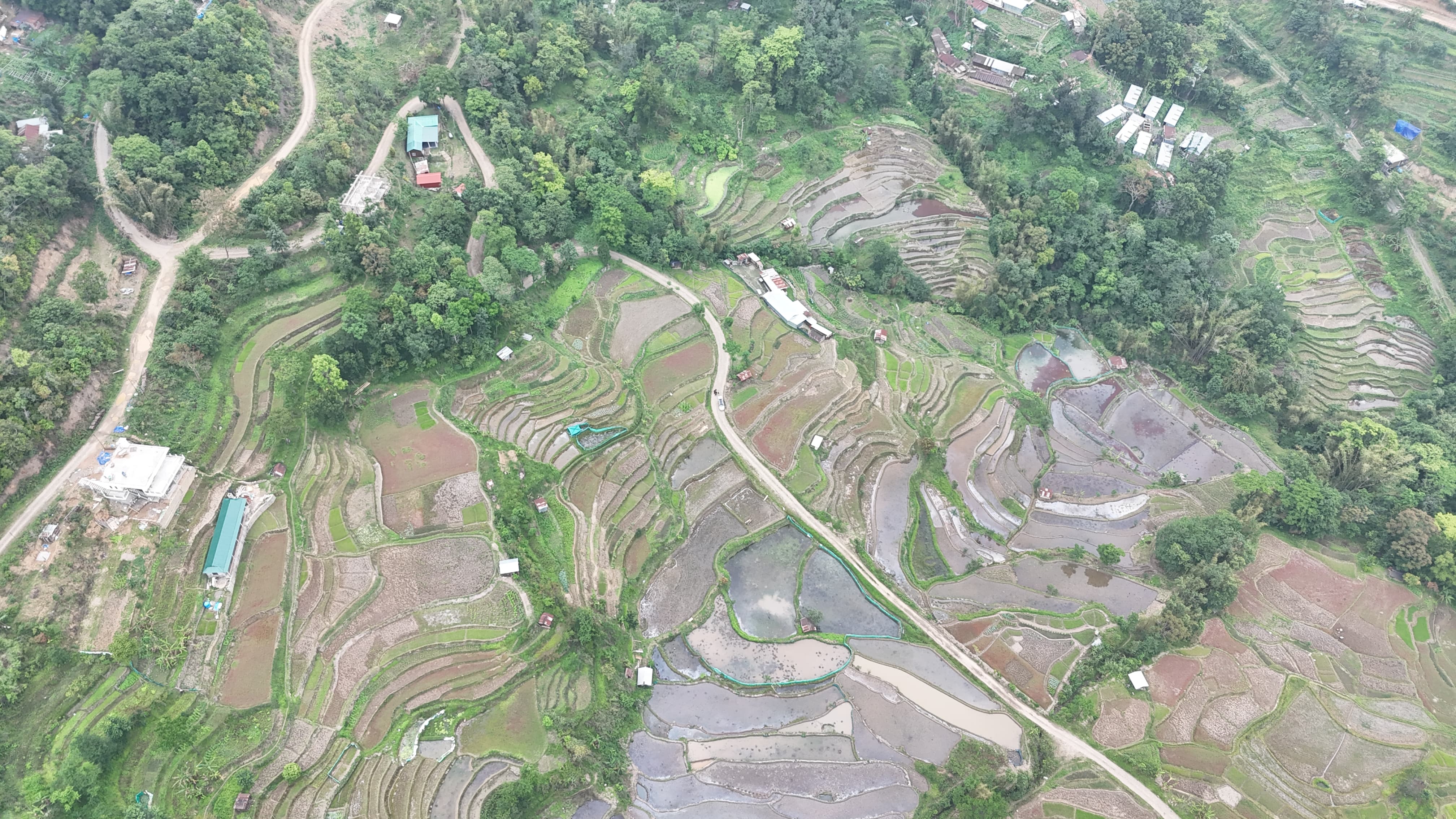
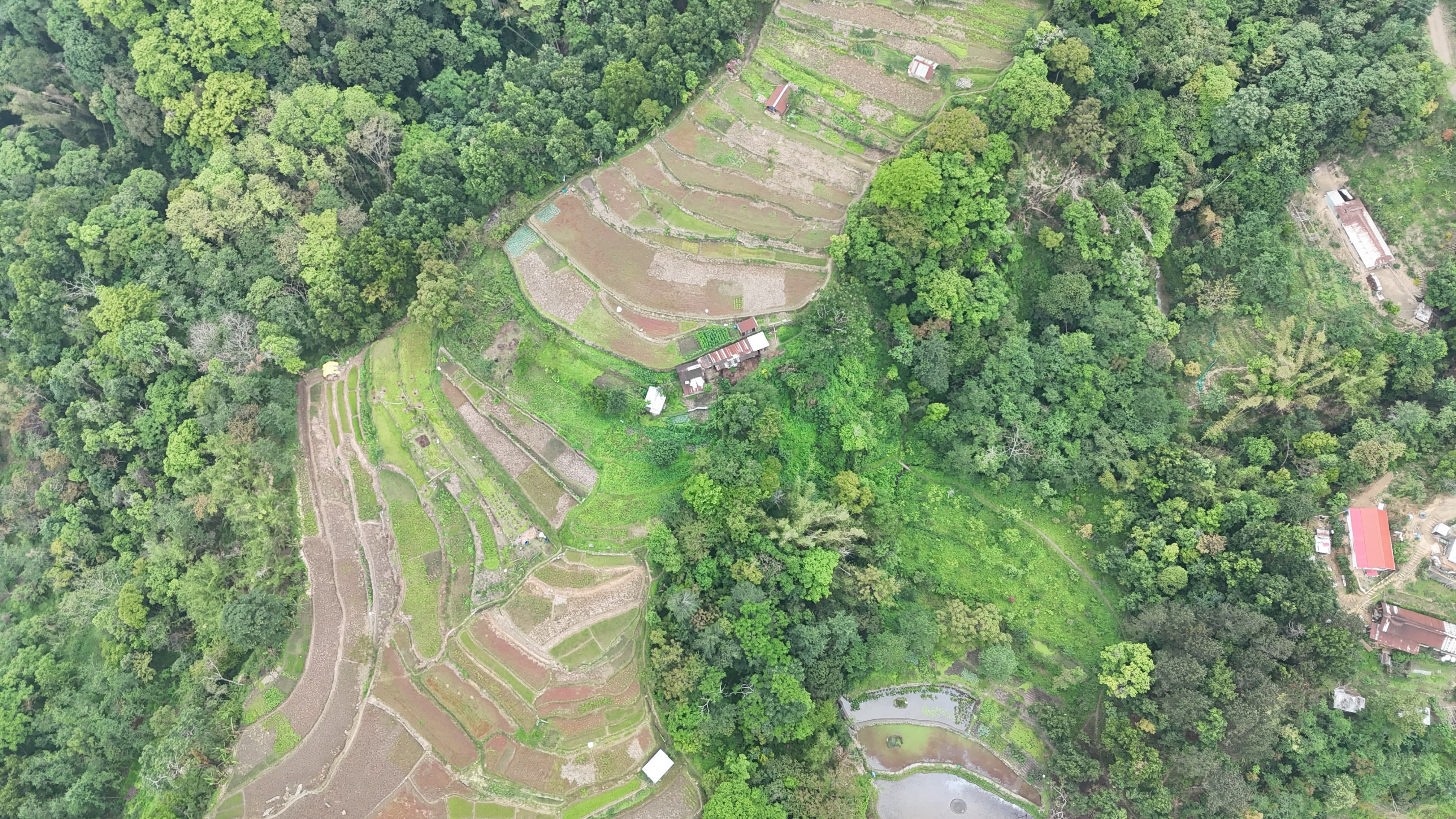
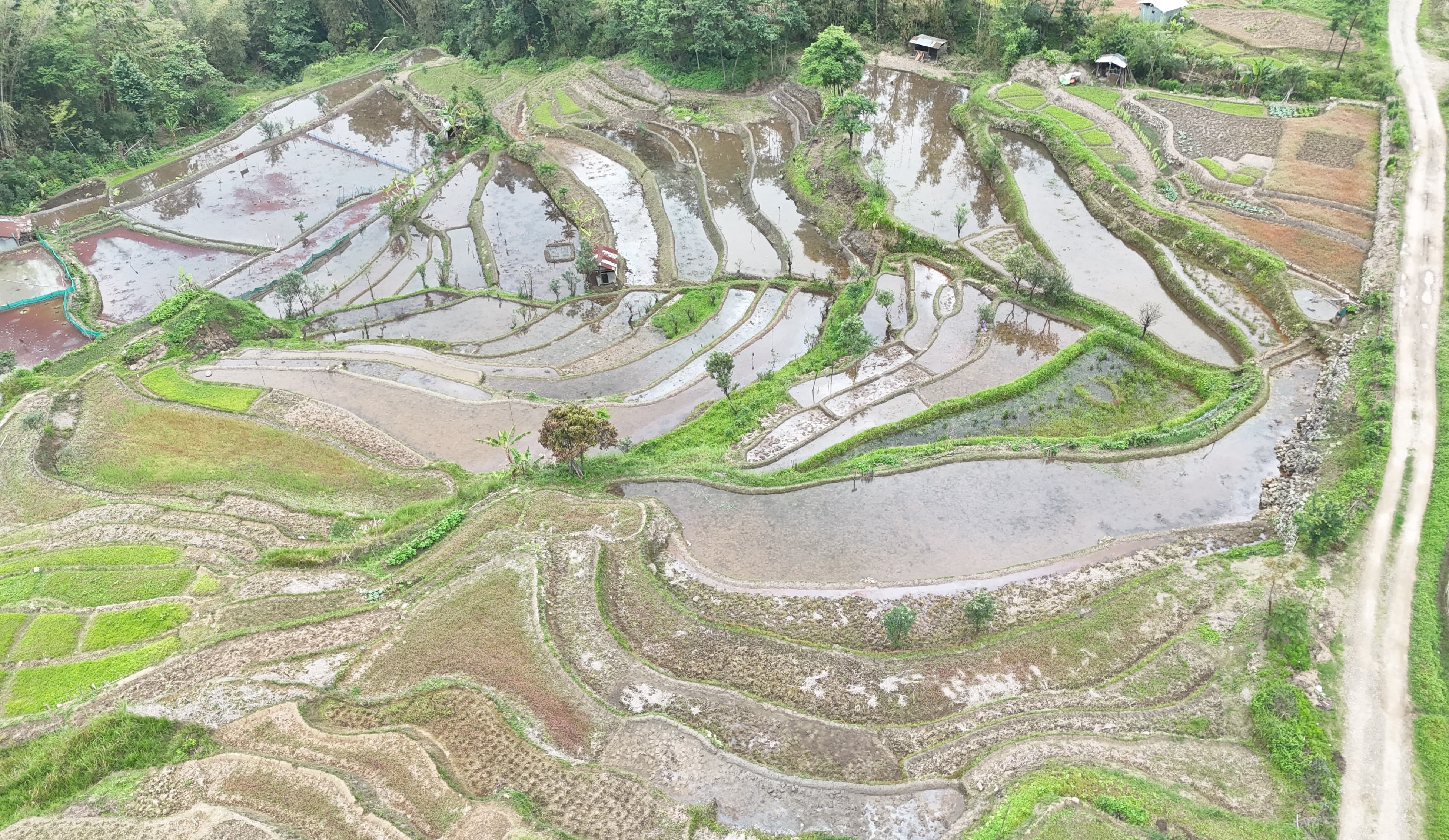
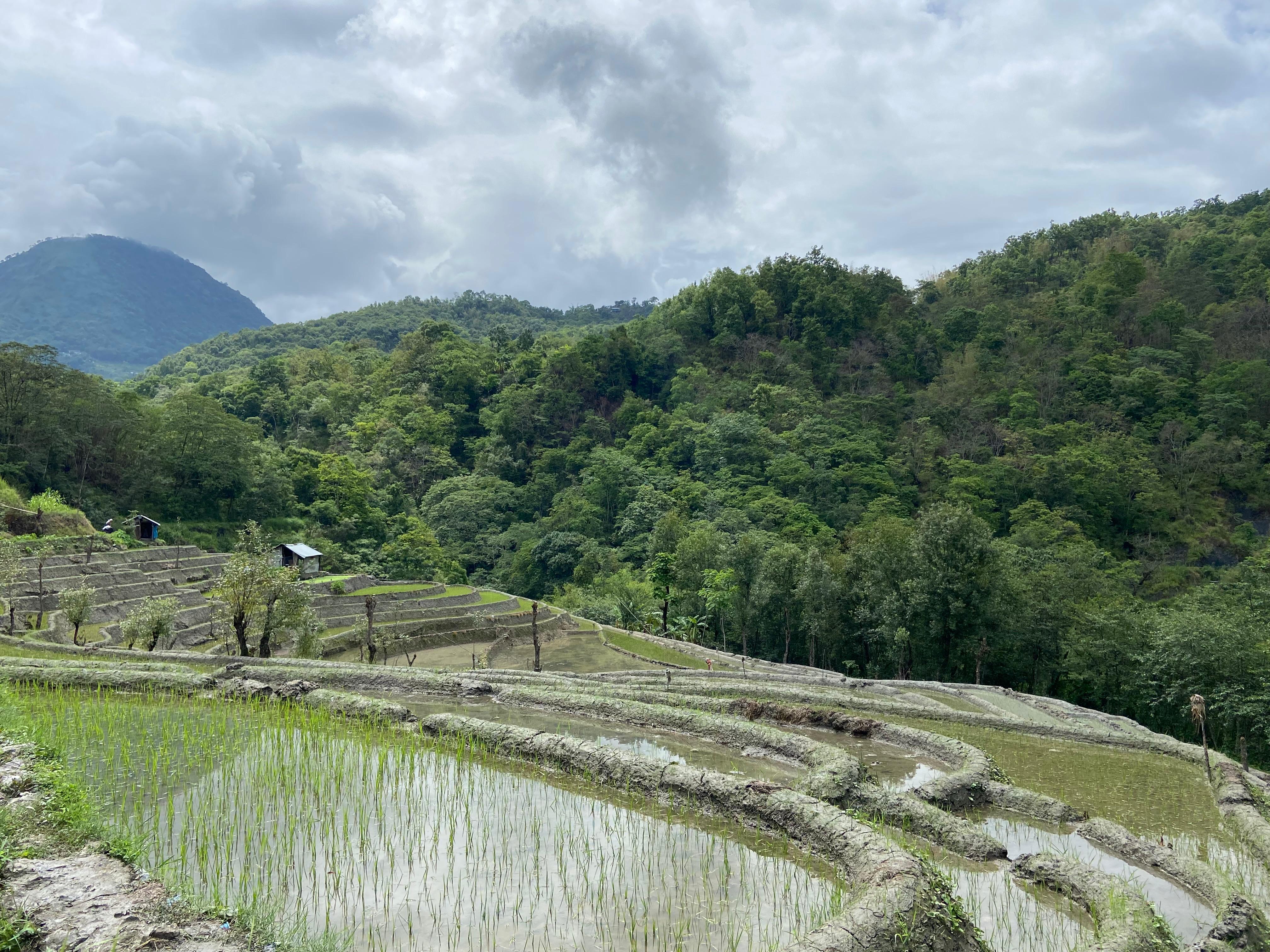
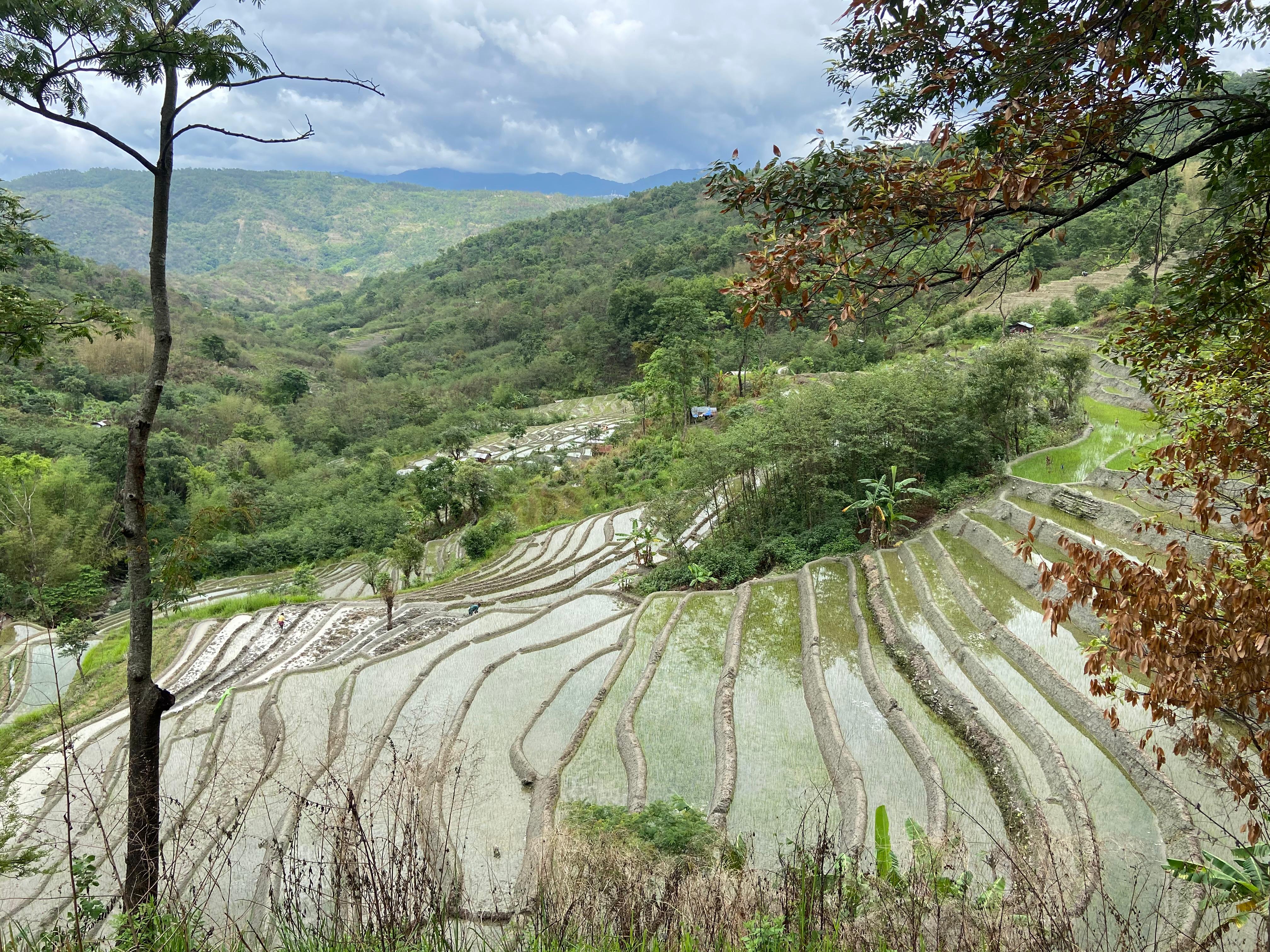
In monsoon the terraces shimmer electric green; by autumn they ripen to gold before the harvest sickles come out. The shape of the hillside here is the shape of work, repeated across centuries.
The Ridge
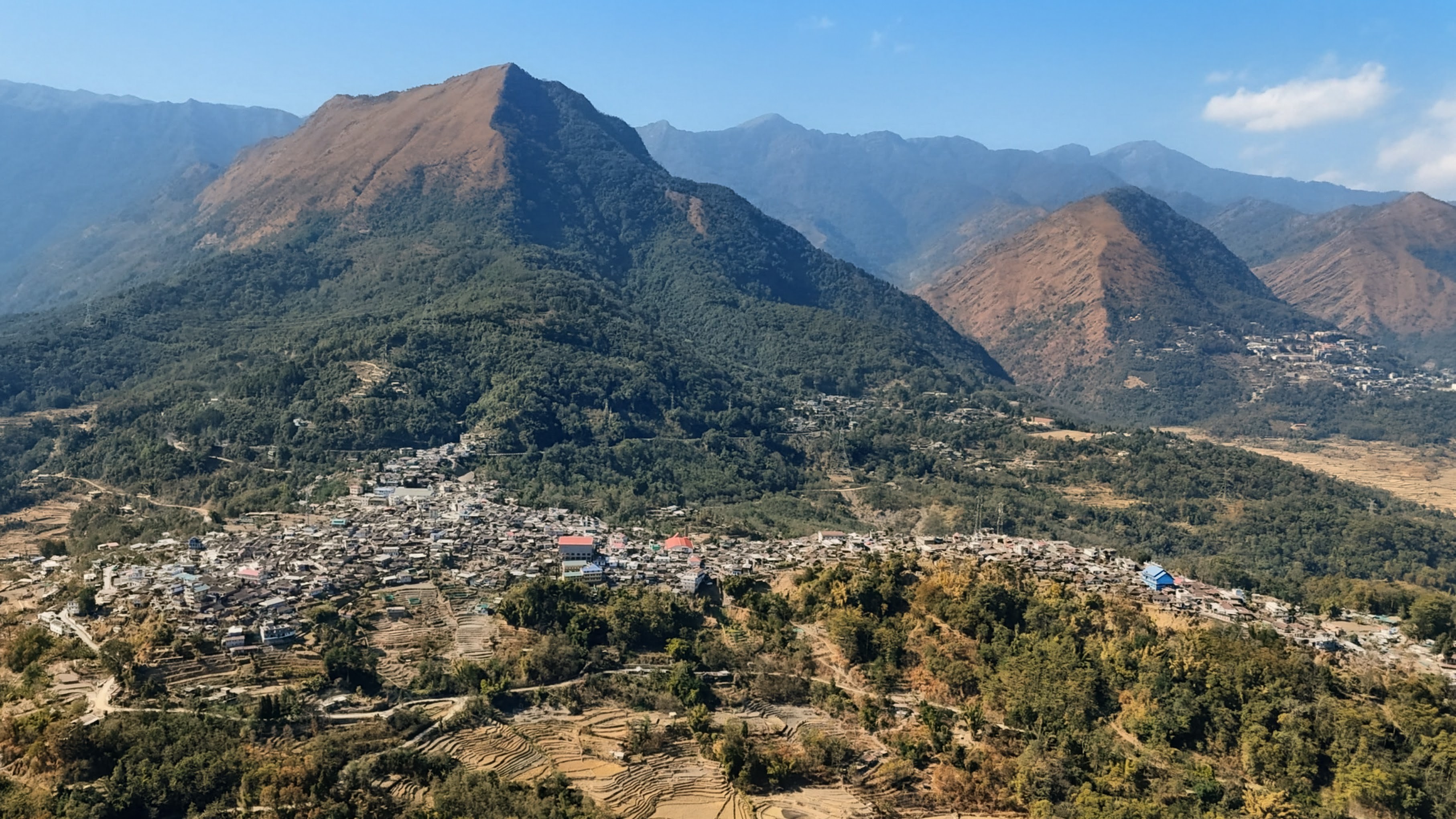
Viswema runs along the spine of a long ridge, its houses threaded along it with valleys falling away on either side. The site was chosen for defence — high ground, hard to surround. But it has shaped everything since: how the sun reaches each home, how monsoon clouds drift past kitchen windows, how weather climbs the slope across the valley toward you.
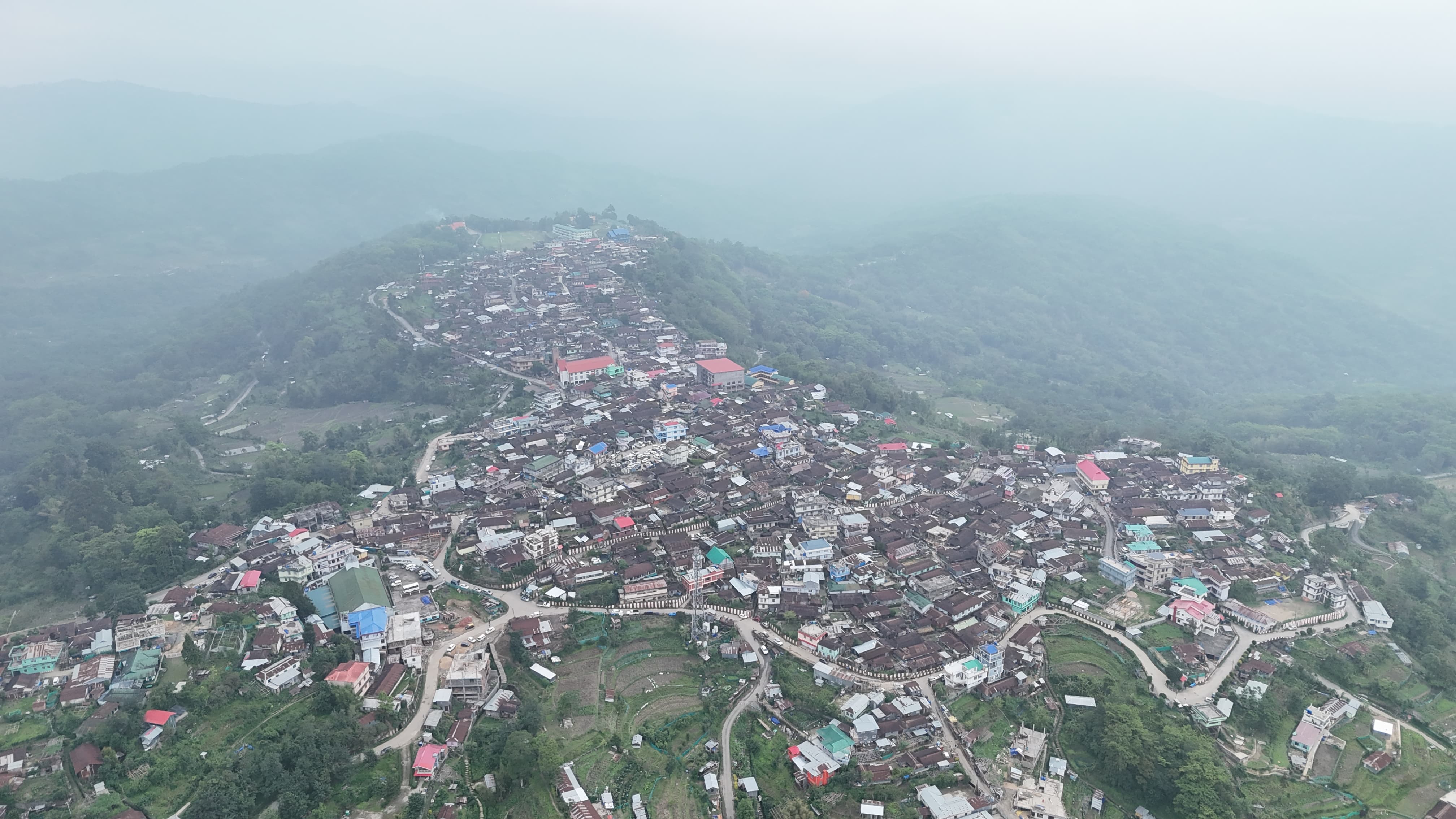
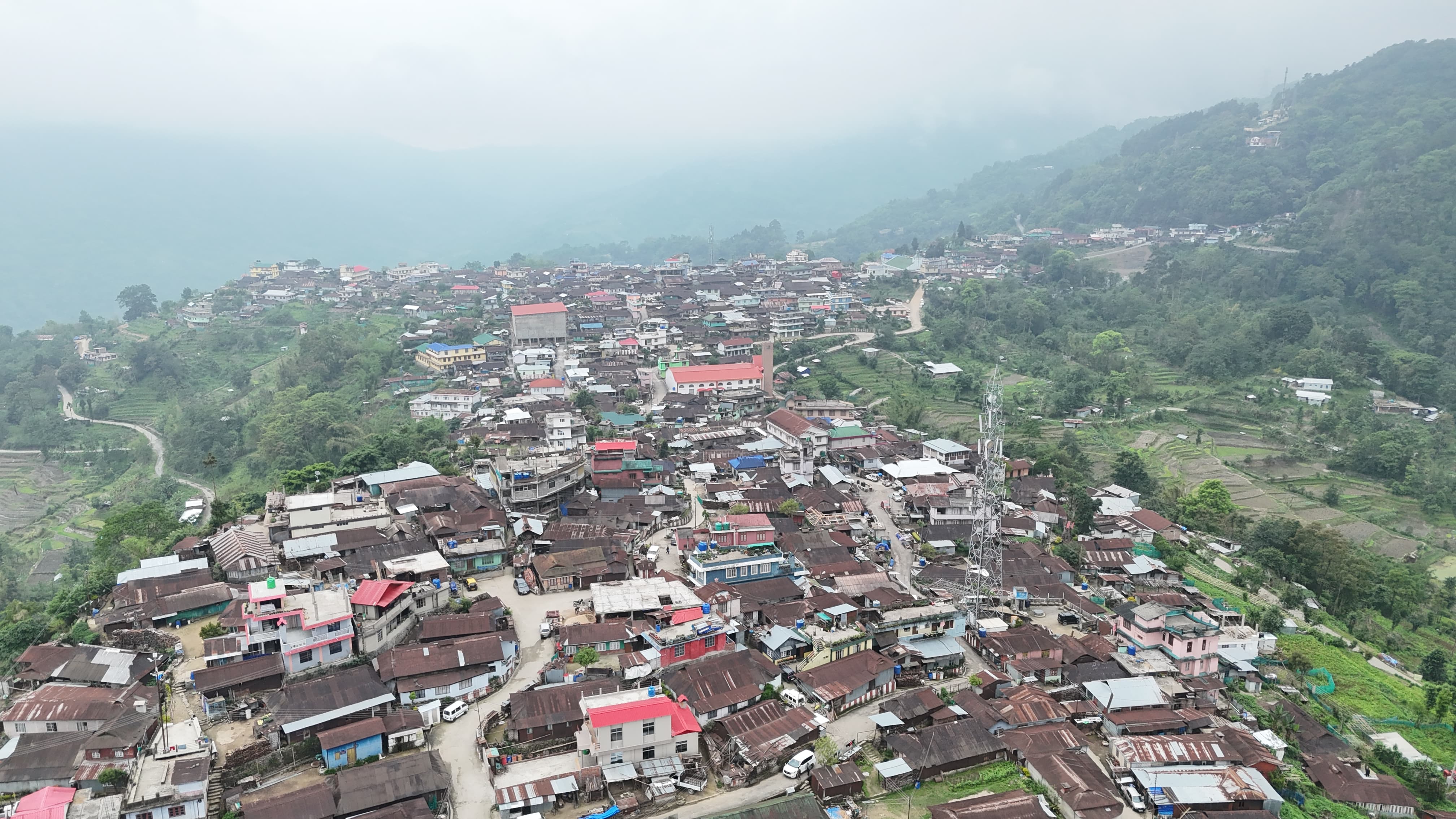
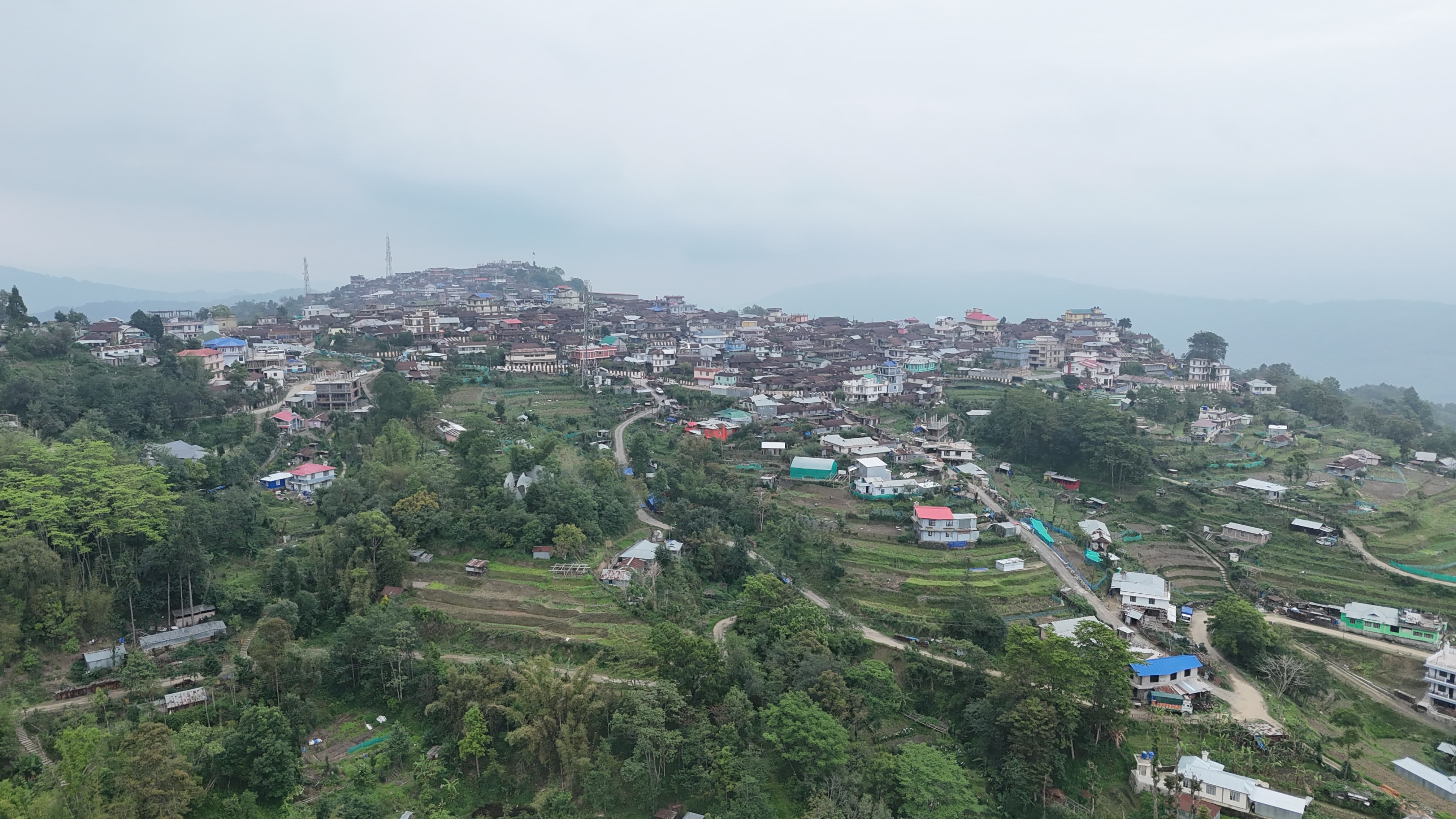
The fortress logic is long gone. What remains is one of the most dramatic settings of any village in Nagaland.
The Long View
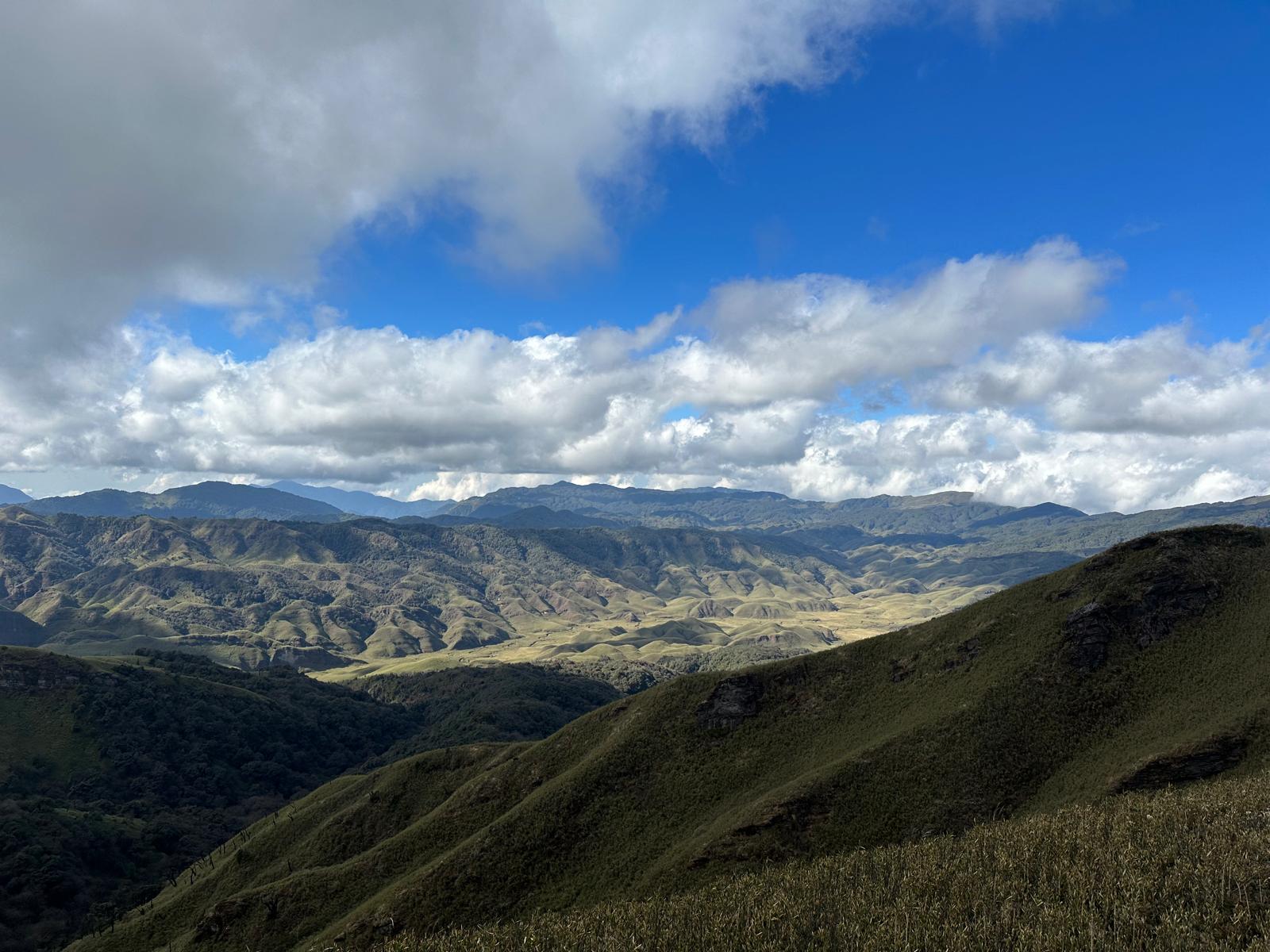
From the high ground above the village, the shape of this landscape finally makes sense. Ridge stacks behind ridge in long parallel waves, and the deep valleys that once made Viswema defensible reveal their full reach.
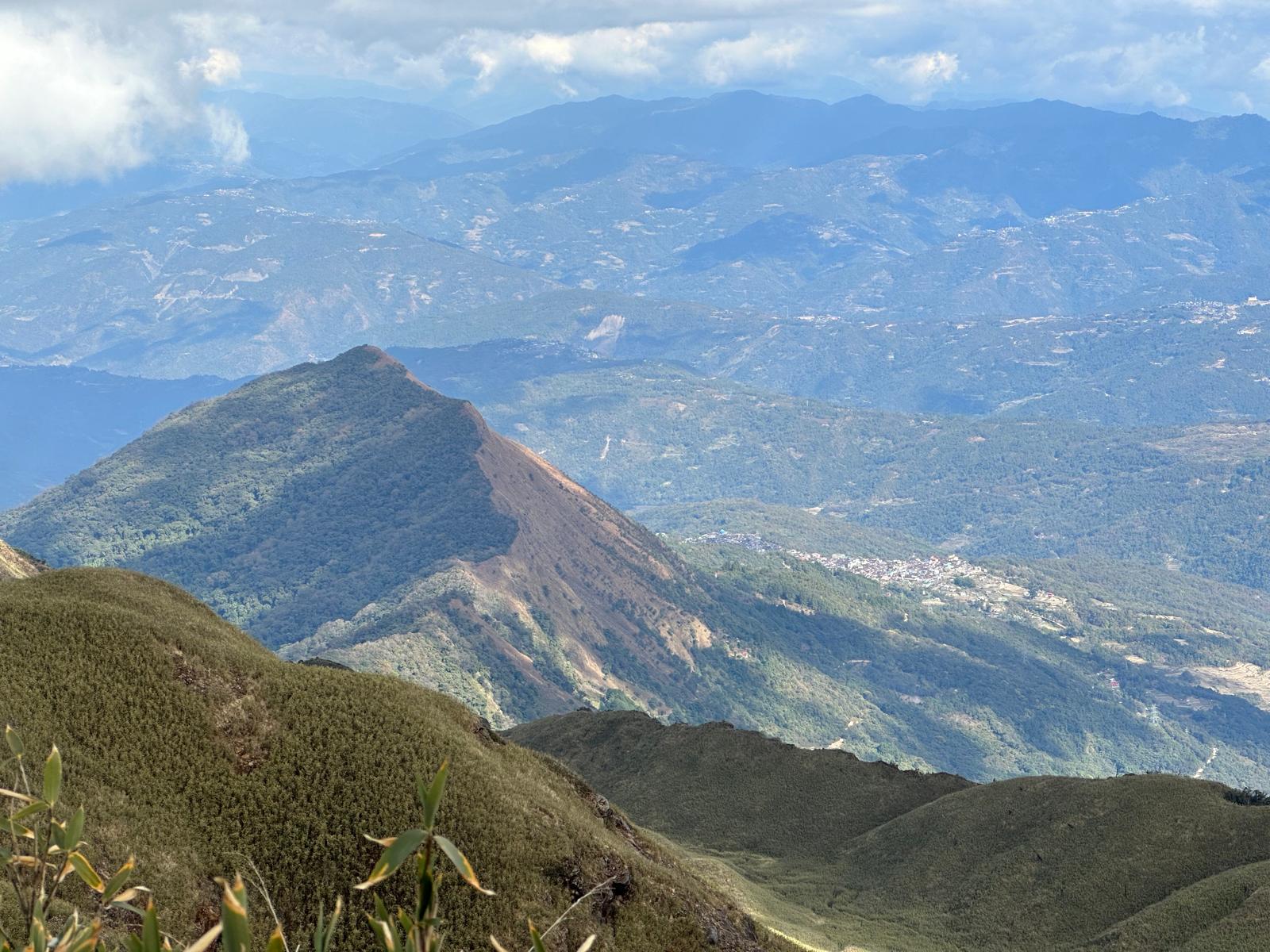
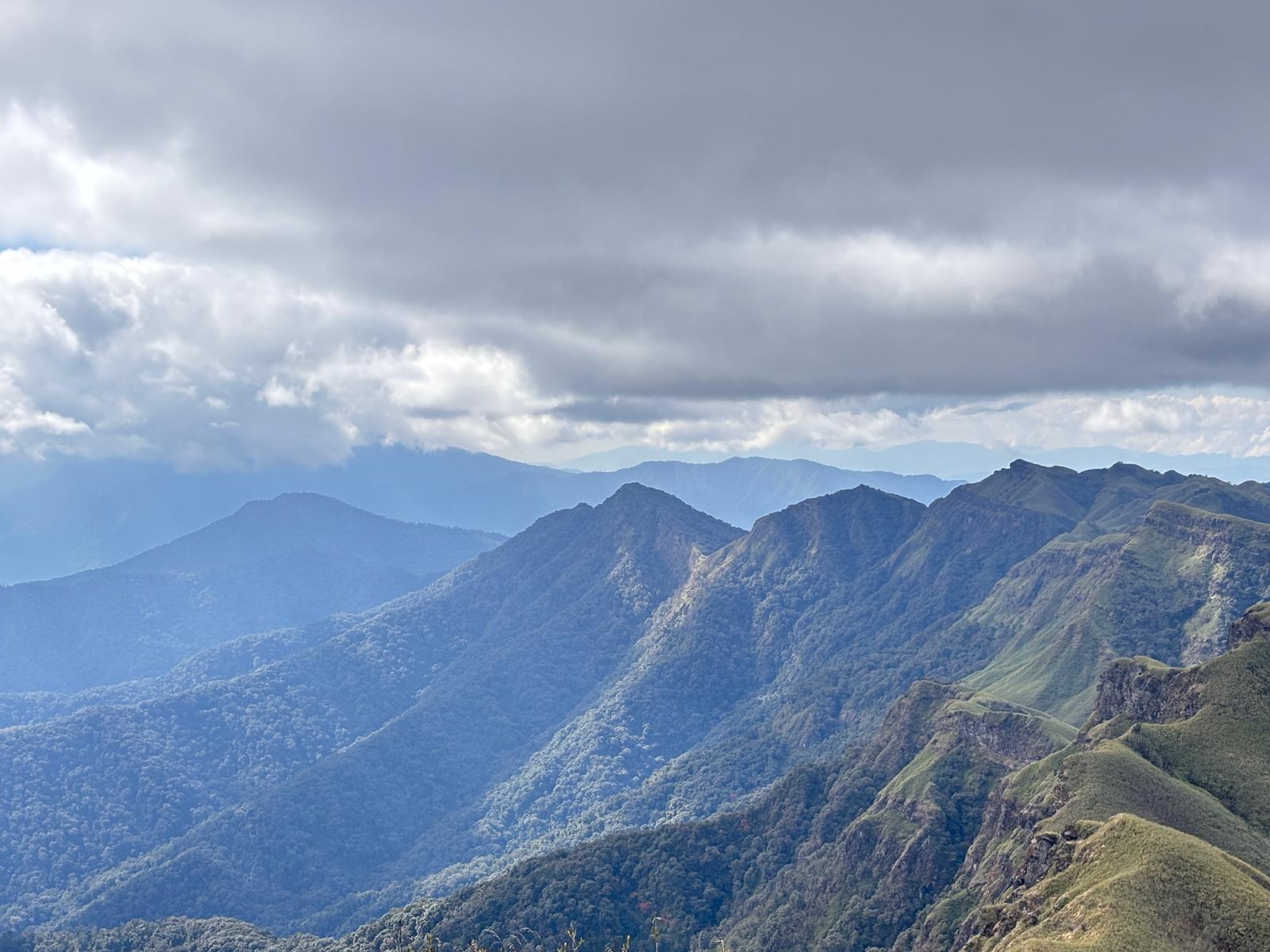
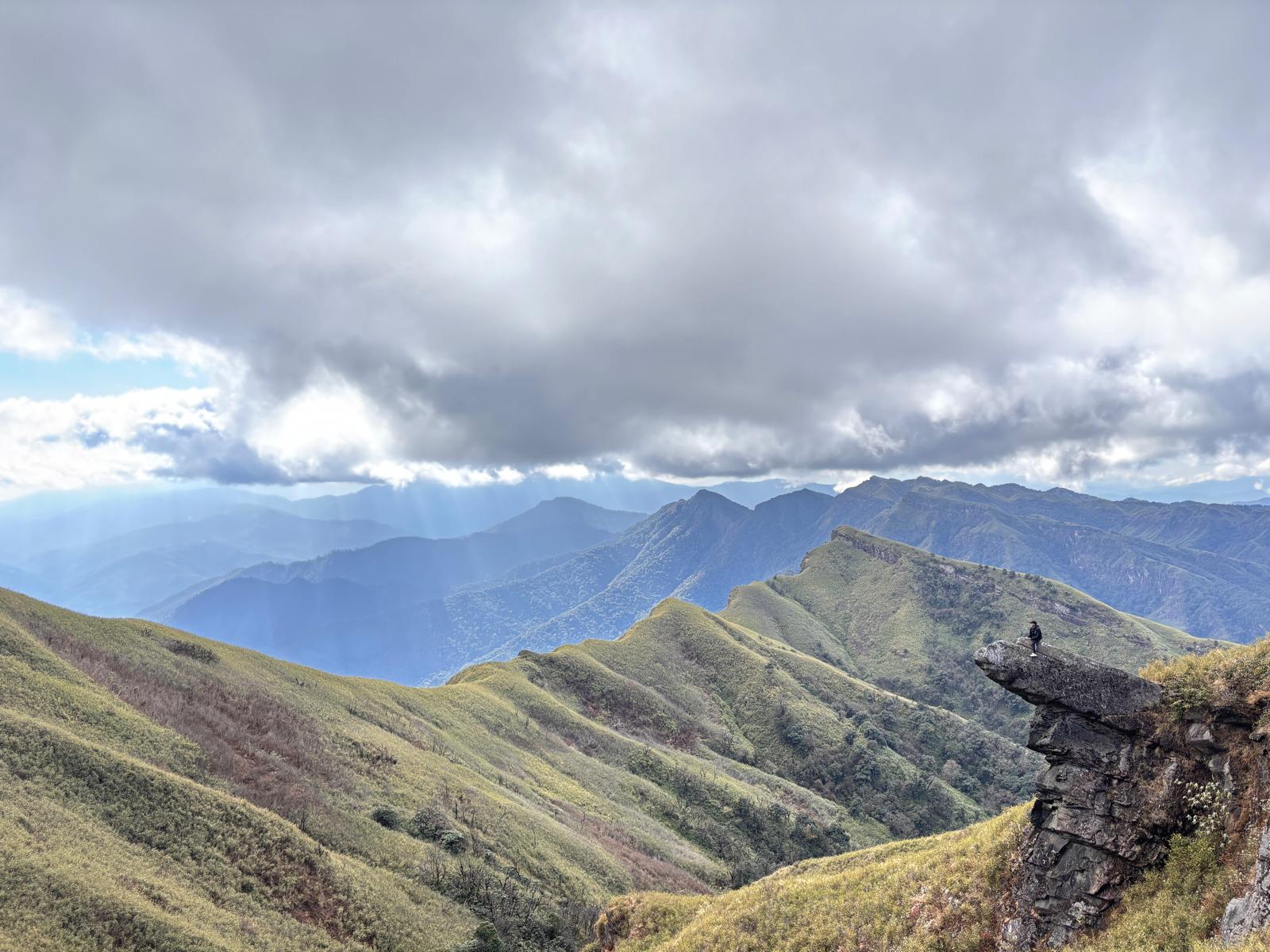
At the highest point the land divides cleanly — the green trough of Dzükou Valley falling away on one side, the sharp rise of Mt. Teyozwü on the other.
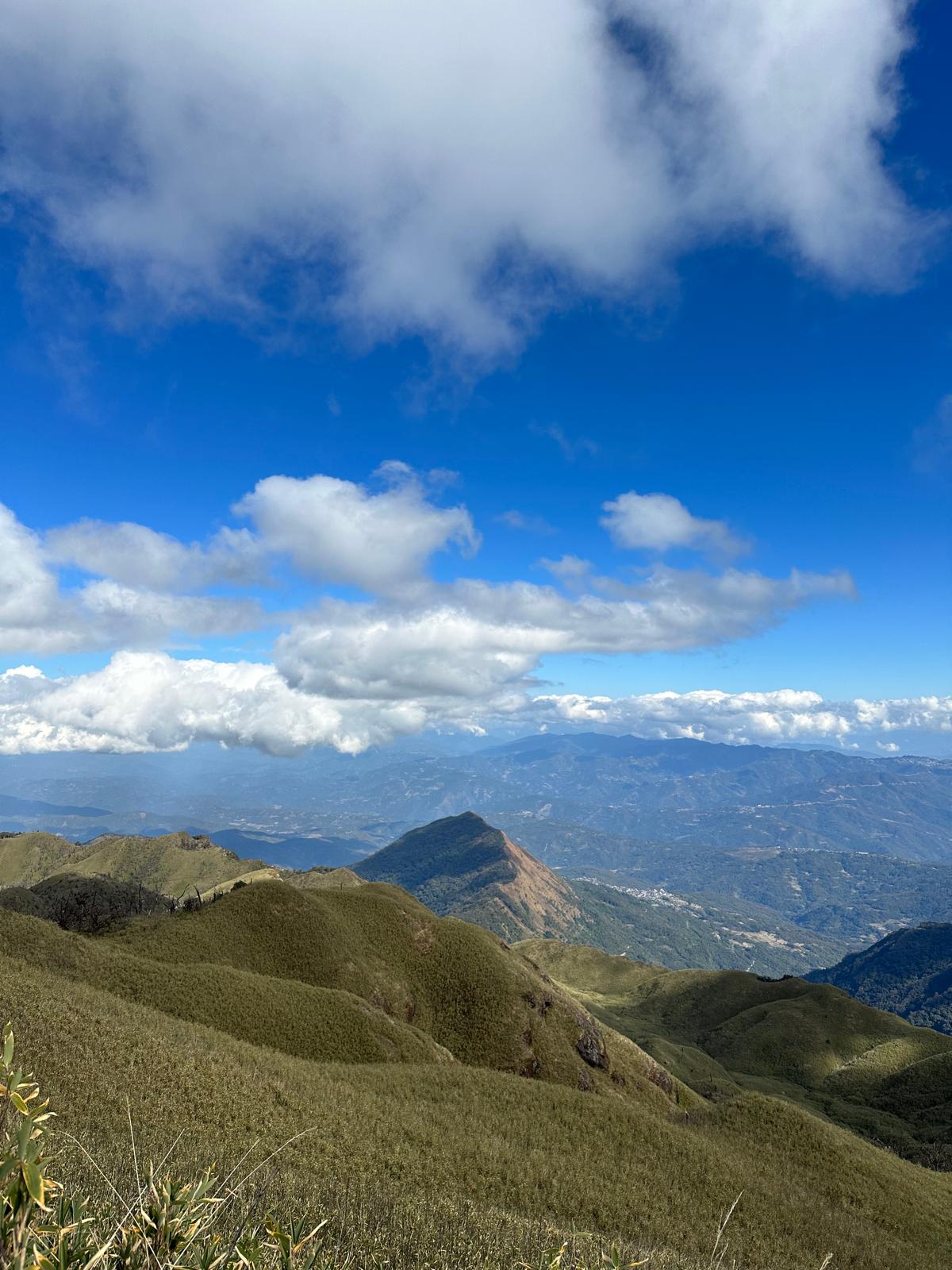
Mt. Teyozwü
A lone green spire lifting clear of the gold summit grass, with the hills falling away behind it in fold after fold of hazed-blue ridge.
The Salt Spring
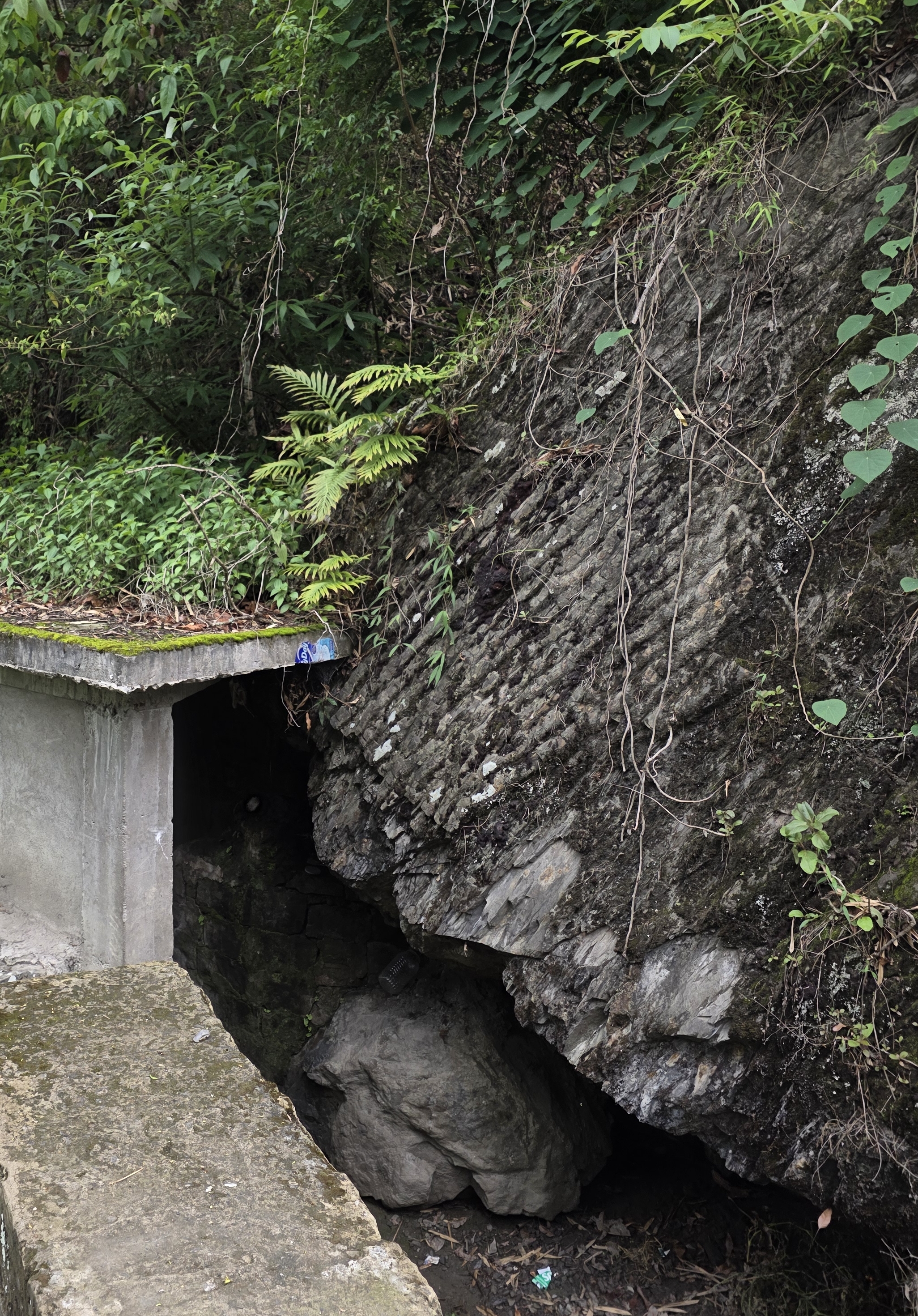
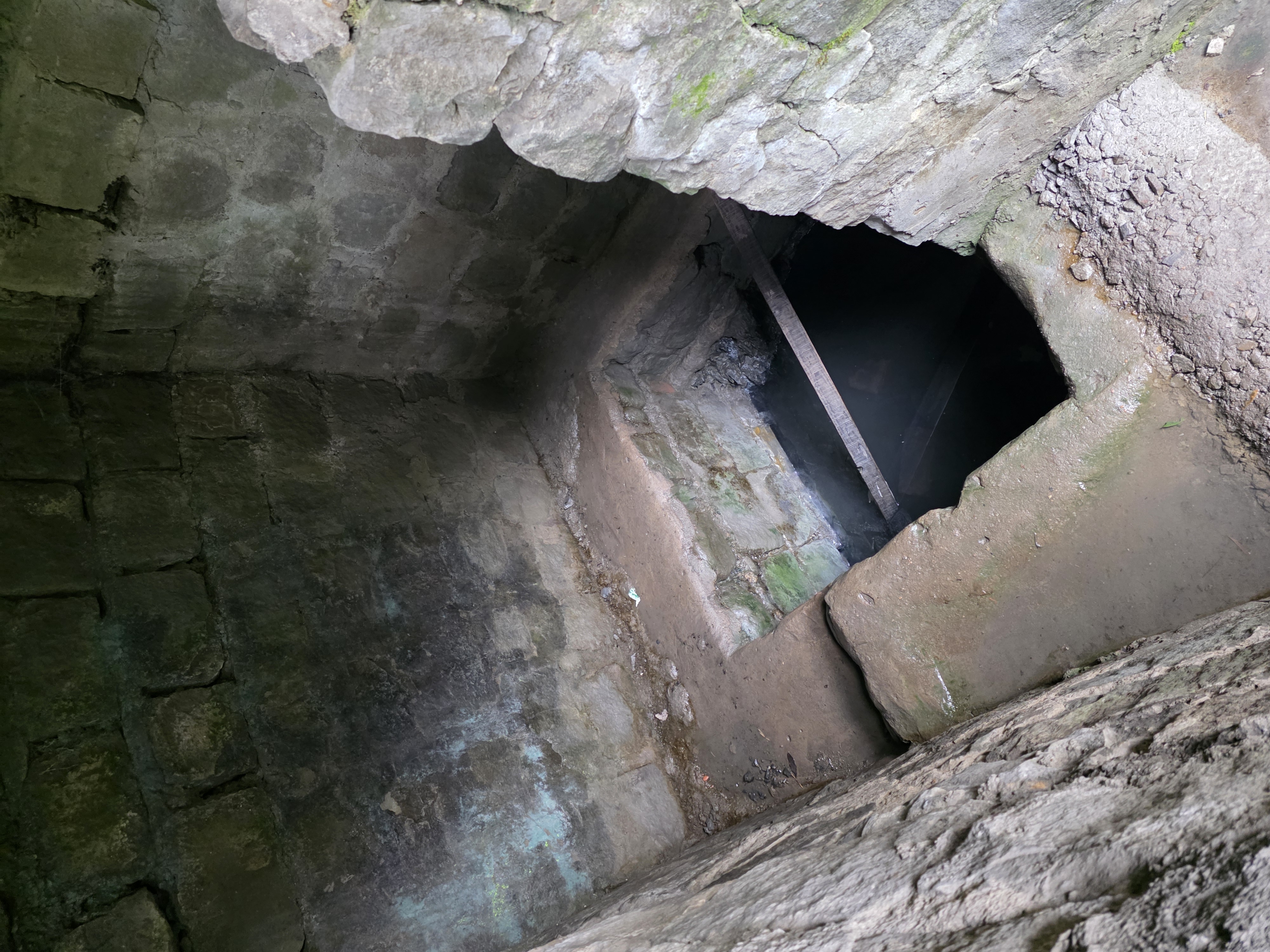
Around Viswema, hidden springs rise perpetually salty. The Naga Hills sit on Tertiary-age marine sediments of the Disang and Barail formations, whose trapped evaporite layers feed groundwater that surfaces along faults as year-round brine.
The brine runs steady through every season. Its source is the rock itself, not the rains above. For centuries, Naga families have carried this water home in bamboo, boiled it down over wood fires, and gathered the salt left behind. It was once a prized trade good between hill and plain.
Valley Streams
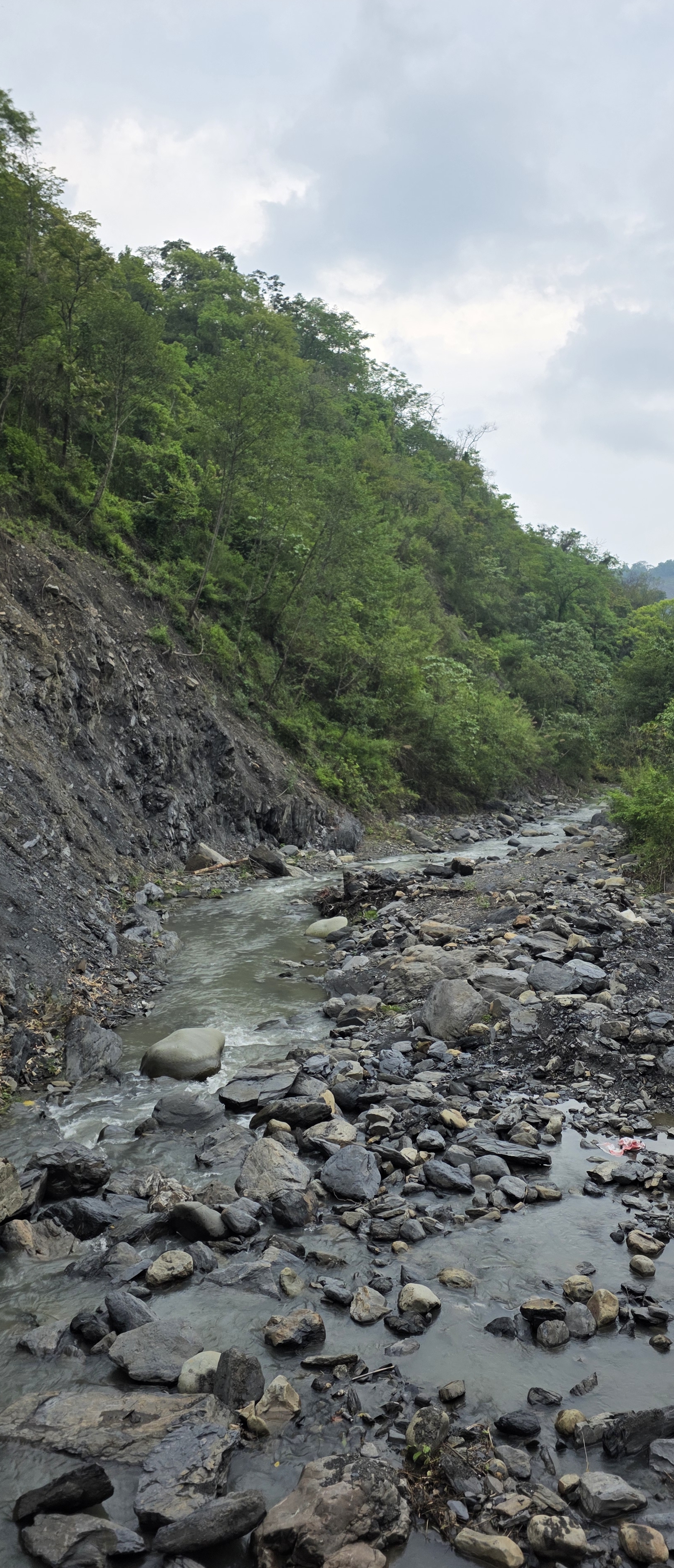
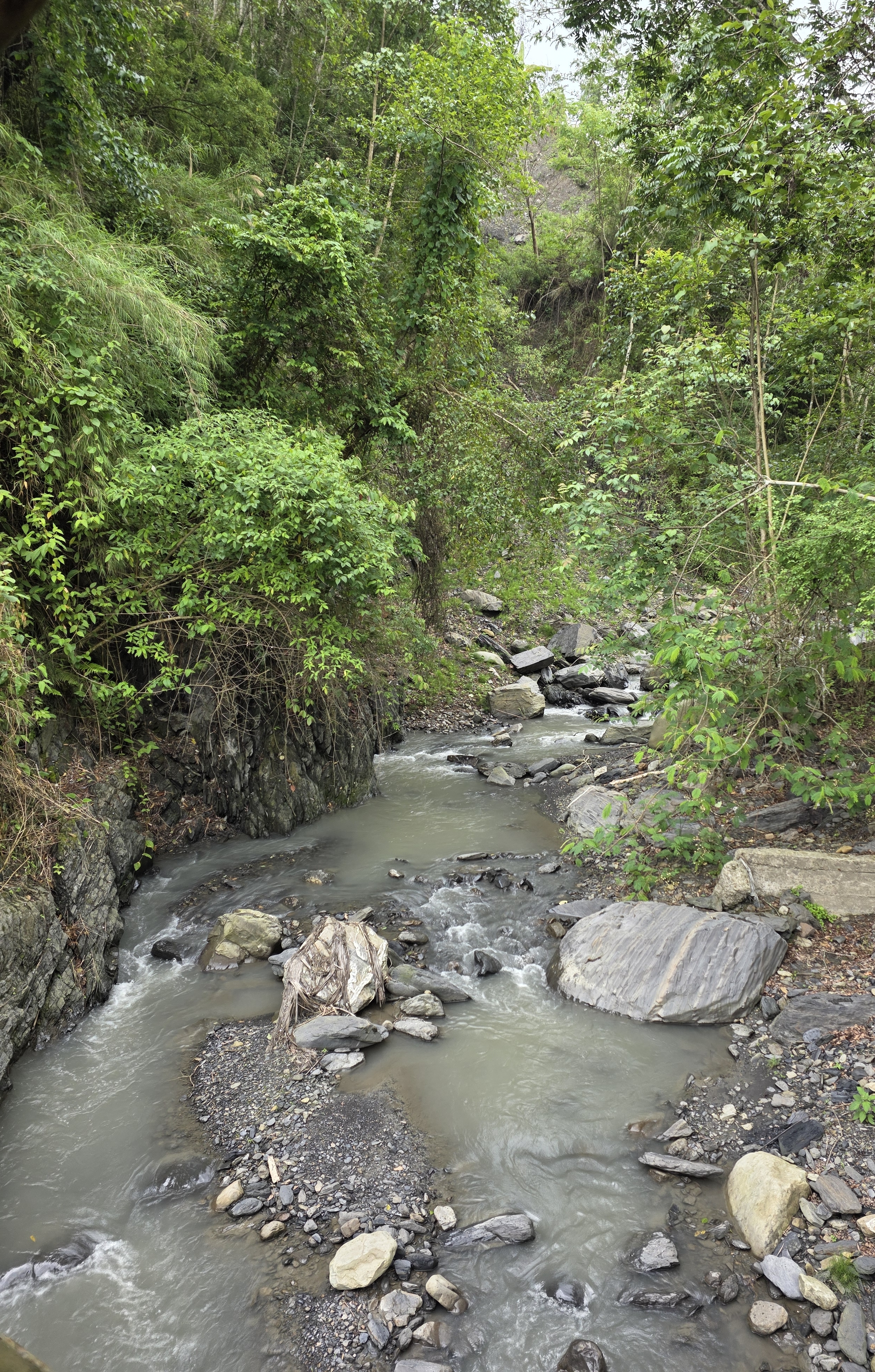
Below the village, streams gather in the valley: cold, fast, and clear. They wind through dense subtropical forest before joining the rivers that flow south toward the plains.
Wildlife & Nature
Where the forest
still shelters
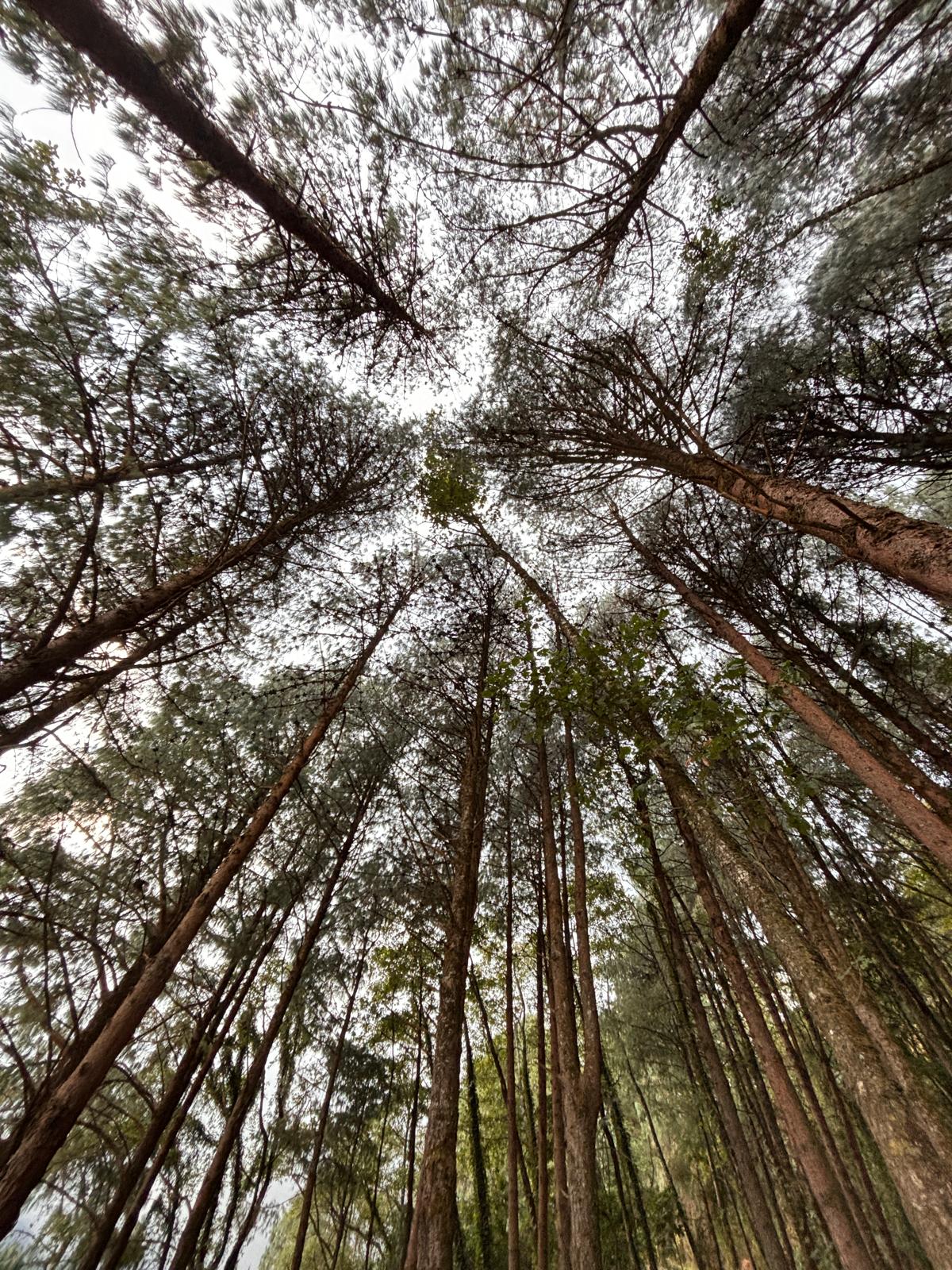
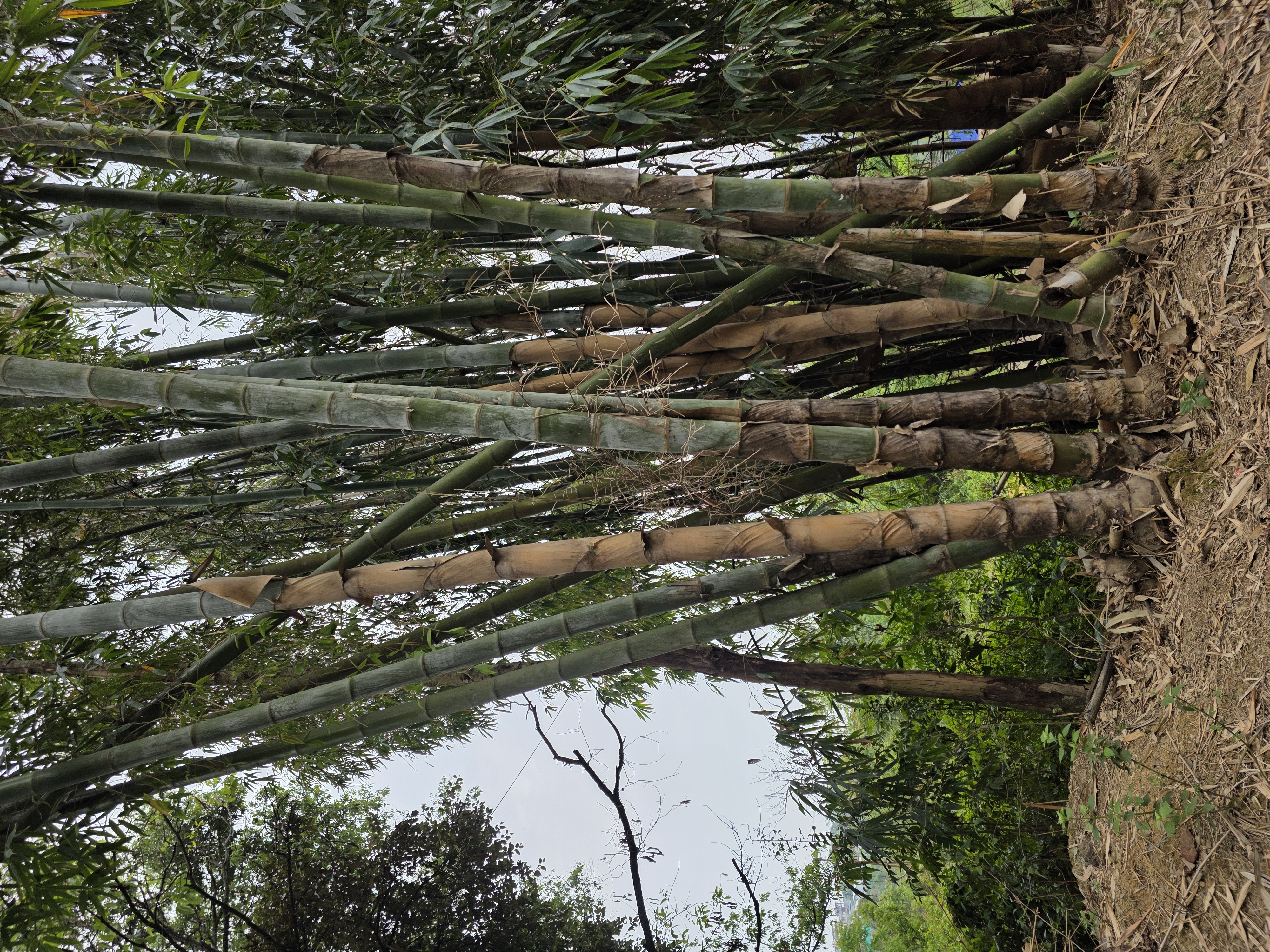
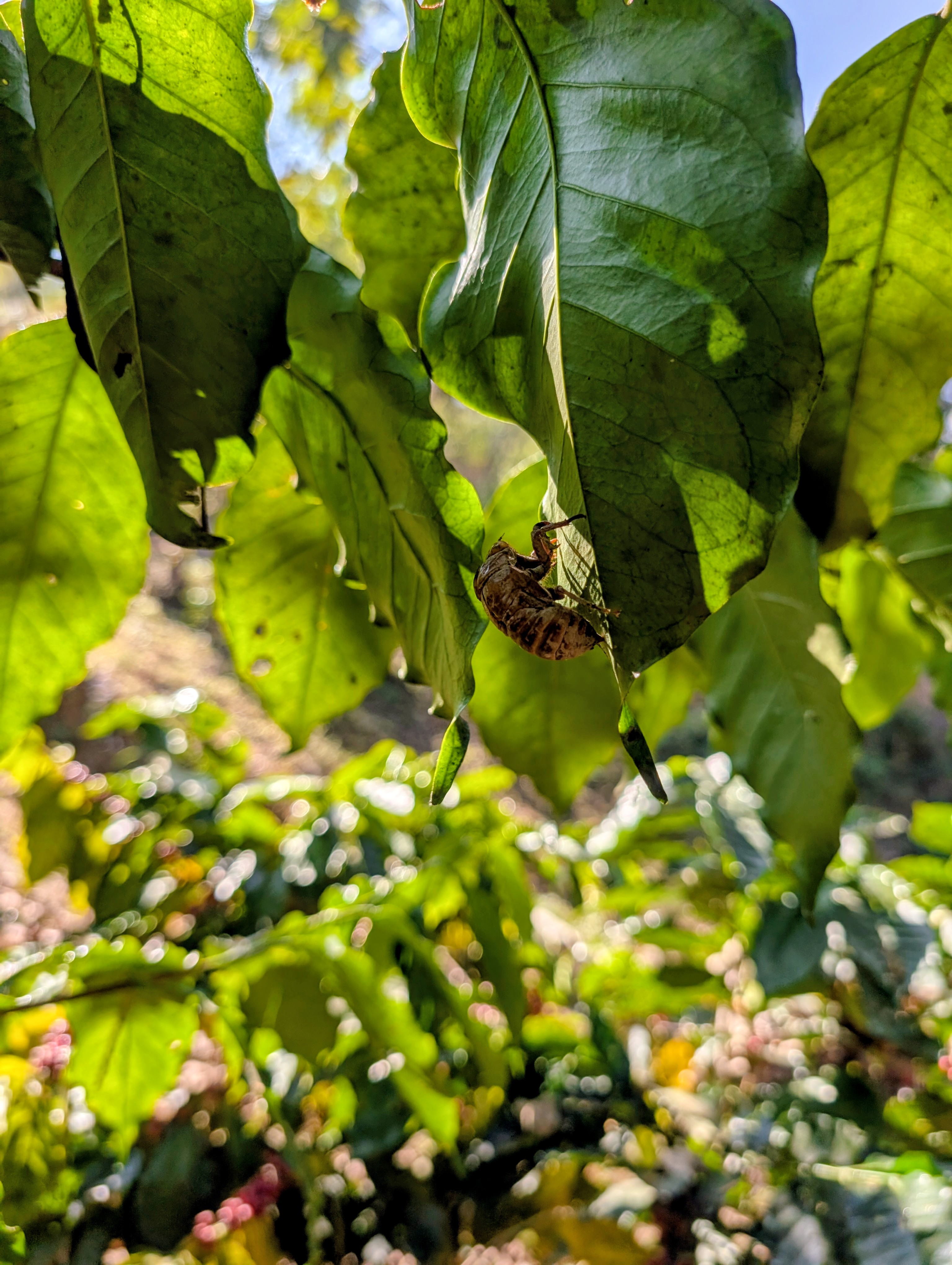
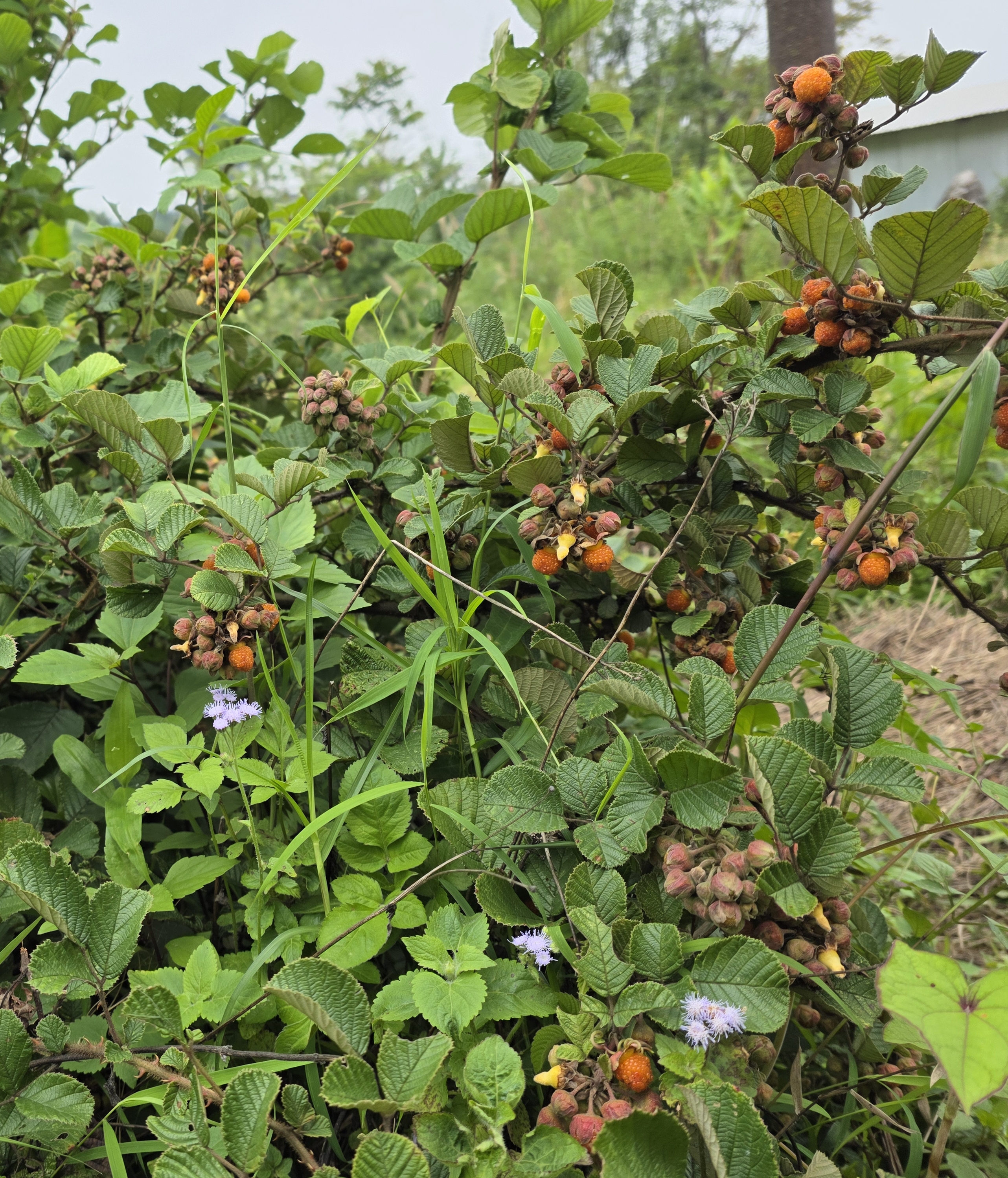
The forests around Viswema run thick across the hills, layered with quiet life. Community land, kept by generations of careful stewardship, still holds its small wonders: bamboo groves, ripening berries, and the traces of creatures that share it.
Daily Life
Rooted in
tradition
The Paddy
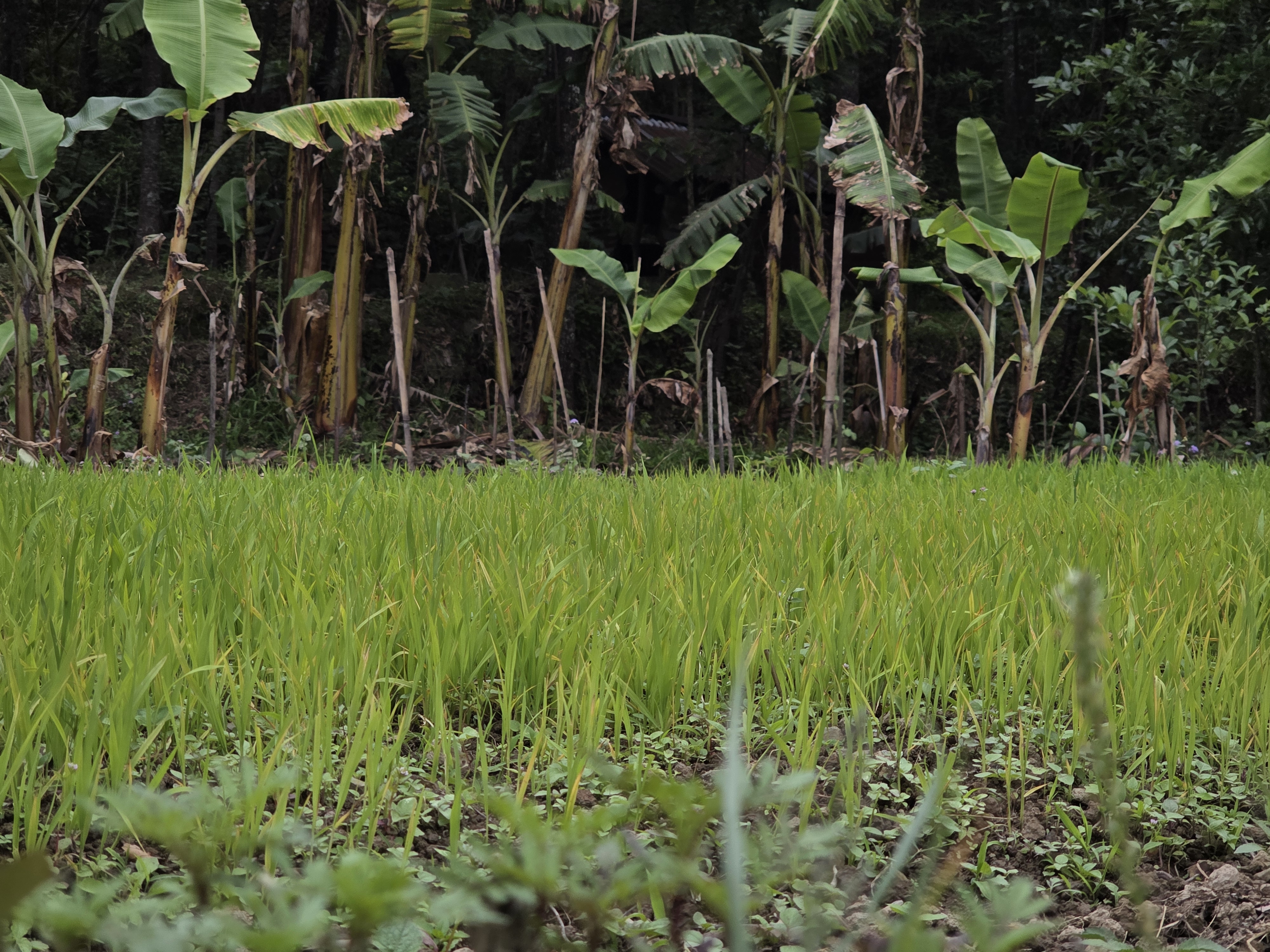
Young rice rises among banana trees on the village edge, staple crops growing side by side in Viswema's everyday green.
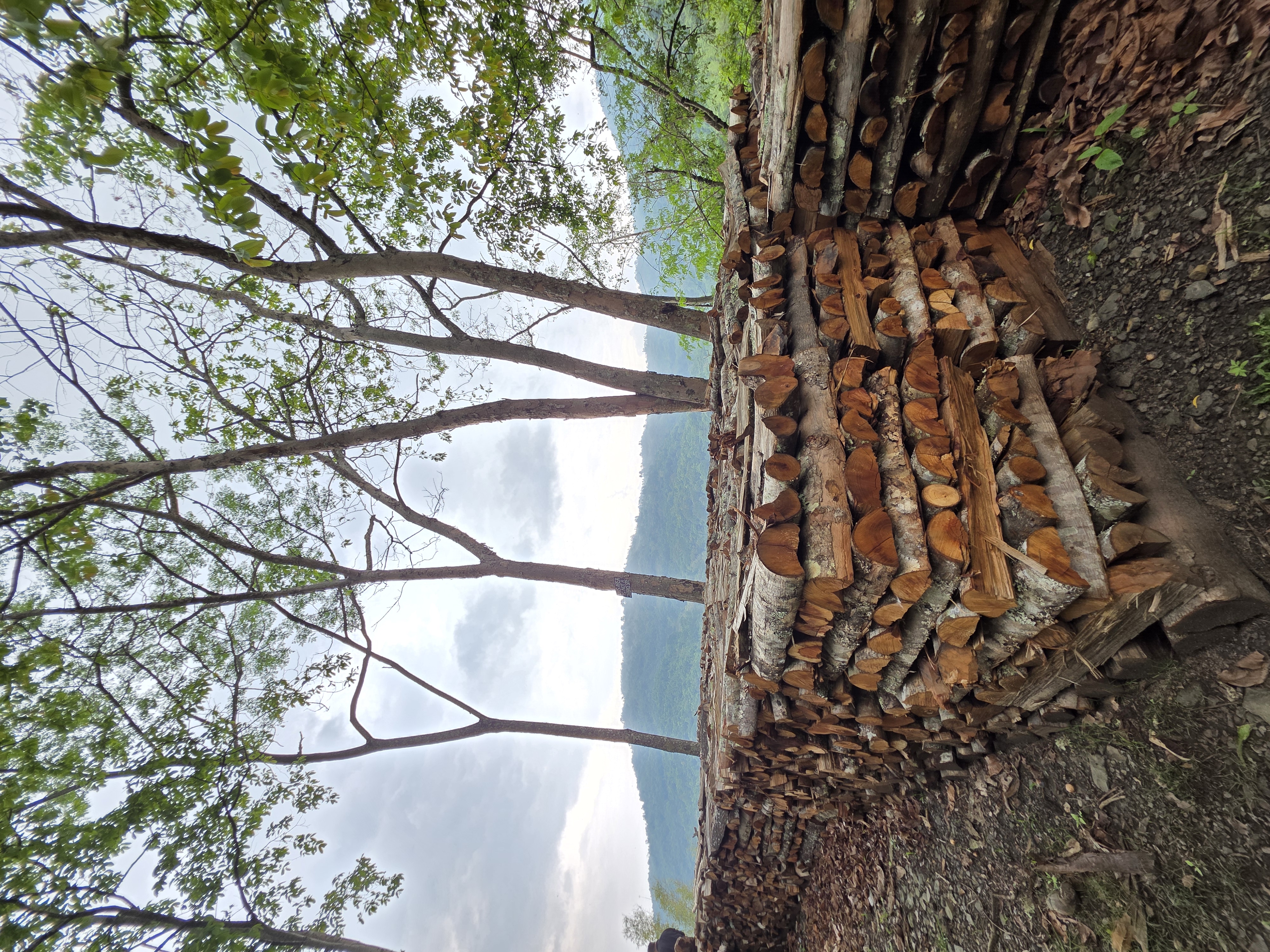
The Hearth
Firewood gathered, split, and stacked through the dry months. Fuel for cooking, warmth, and the long mountain winters.
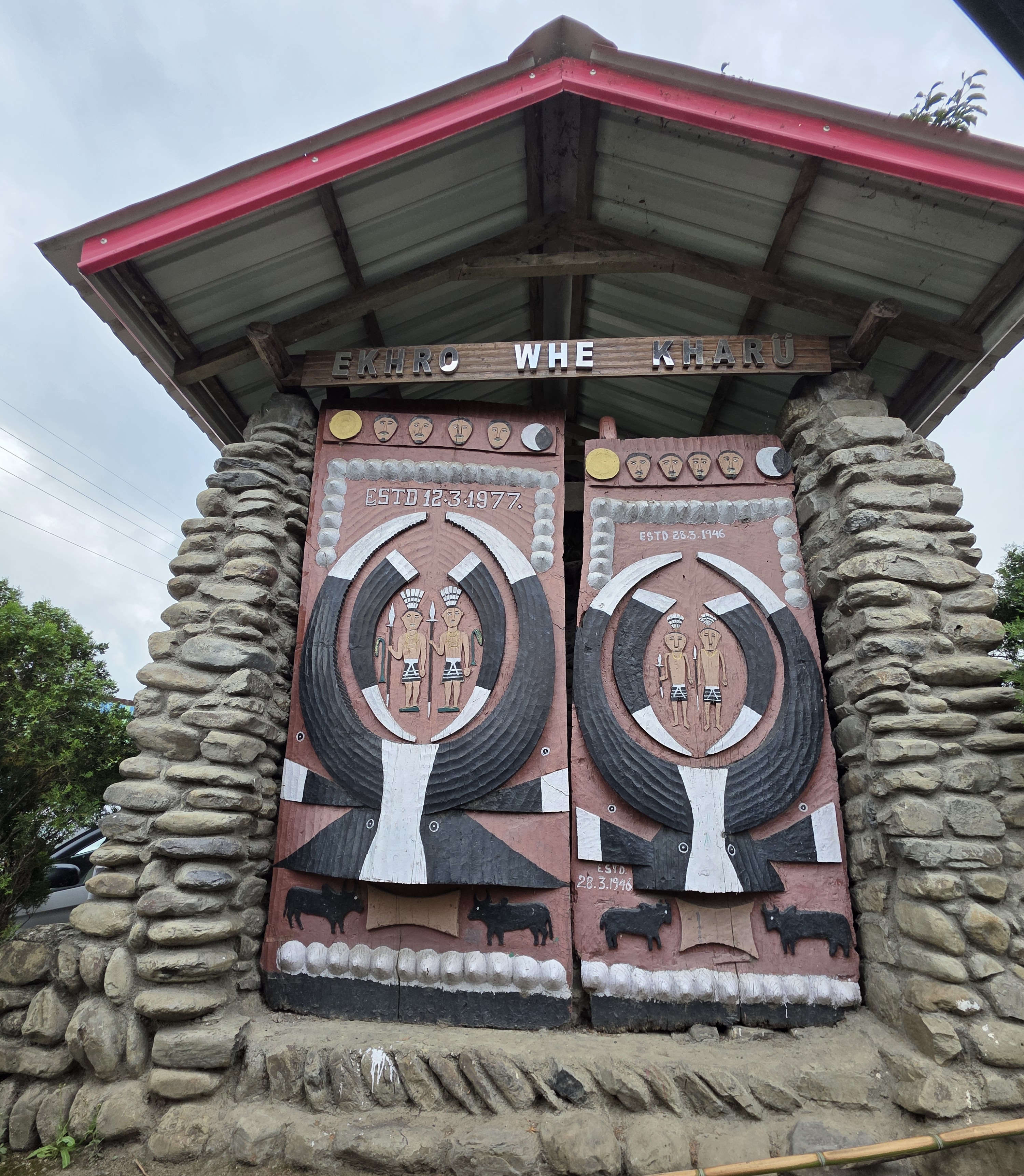
The Kharü
Each khel has its own carved gate: warrior figures, mithun horns, and clan motifs worked into wood and stone, marking territory and memory.
Food & Cuisine
Smoked, fermented,
fire-kissed
Naga food is bold: smoked meats, fermented beans, fiery chillies, and fresh greens from the hillside garden. In Viswema, every meal carries the unmistakable taste of the land and the patience of slow-fire cooking.
Photo coming soon
Smoked Pork
Pork smoked over wood fires for days, a staple of Angami feasts. Rich, deeply flavoured, and eaten with rice and fiery chillies.
Photo coming soon
Axone
Fermented soybean, pungent and earthy, unmistakably Naga. Used as a base for curries or eaten as a fiery chutney alongside every meal.
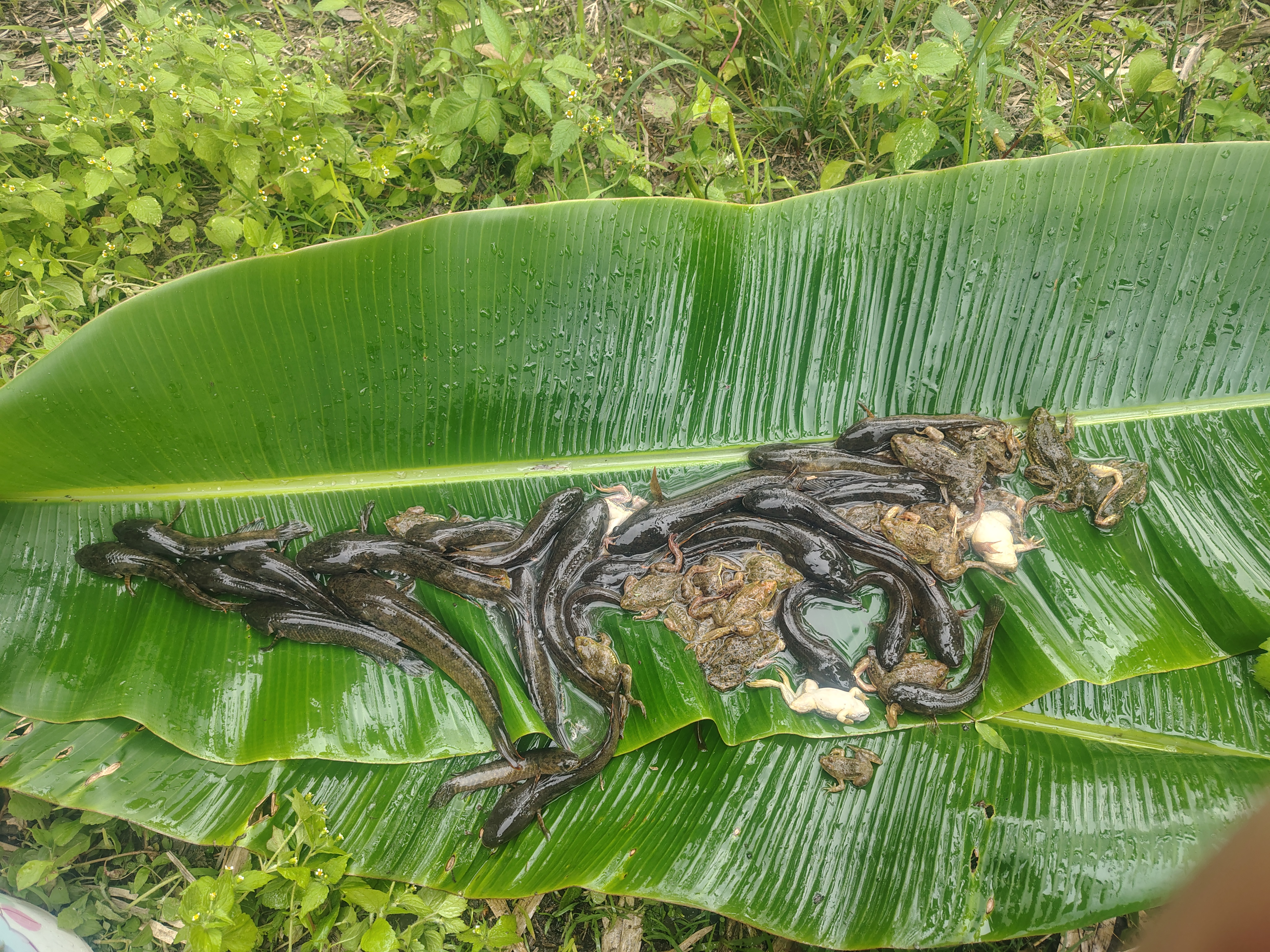
Paddy Catch
Fish and frogs gleaned from the flooded paddies. Chillies and bamboo shoot turn the modest catch into a deeply flavoured meal.
Potatoes from the Garden
Grown on the cool terraces Viswema's potatoes are tended by hand from flower to basket, a quiet staple of the kitchen and the hillside.
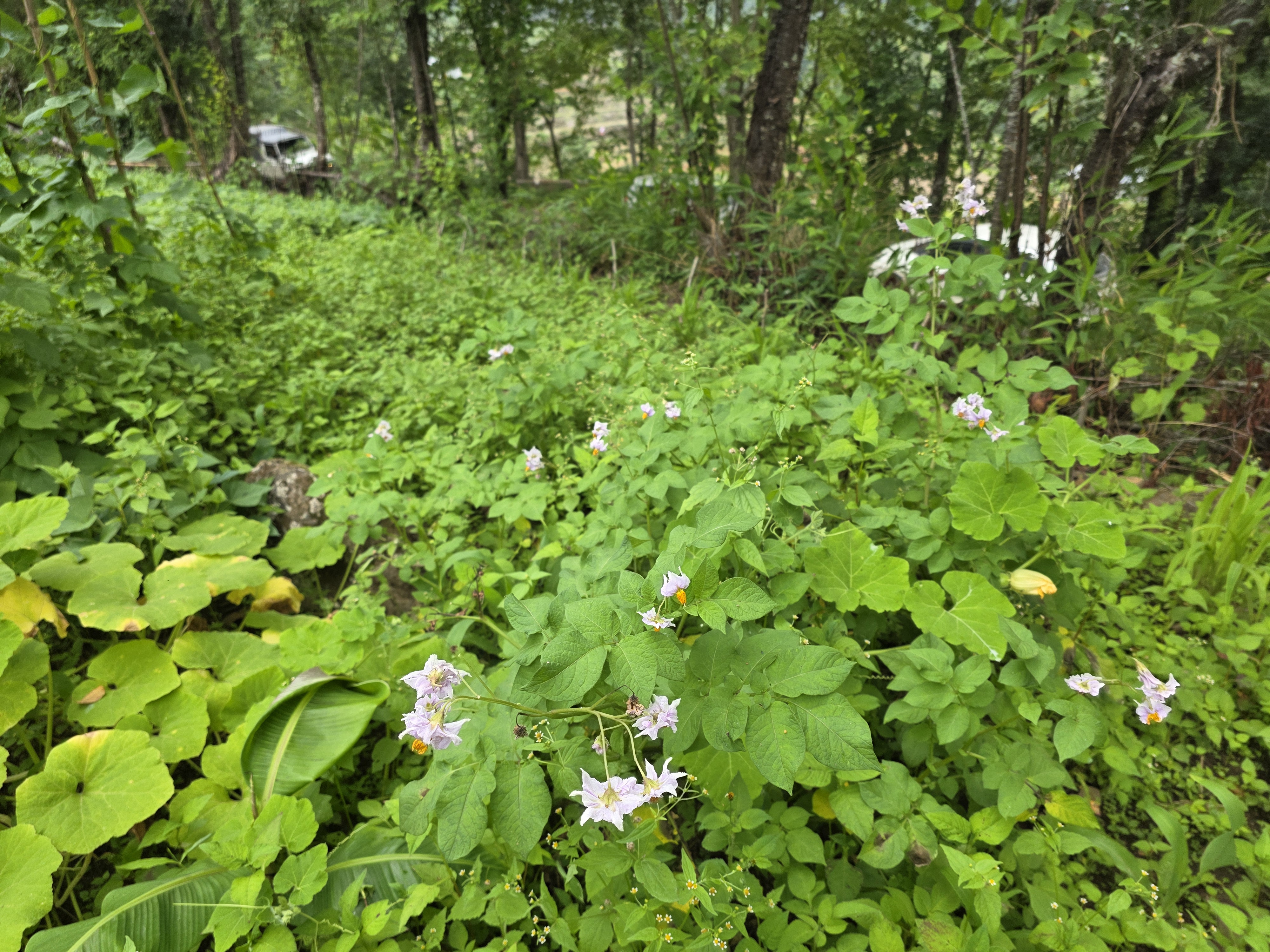
The Garden
At 1,600 metres the cool air suits the potato. Plants spread across the slope, pale blossoms marking the tubers swelling underground.
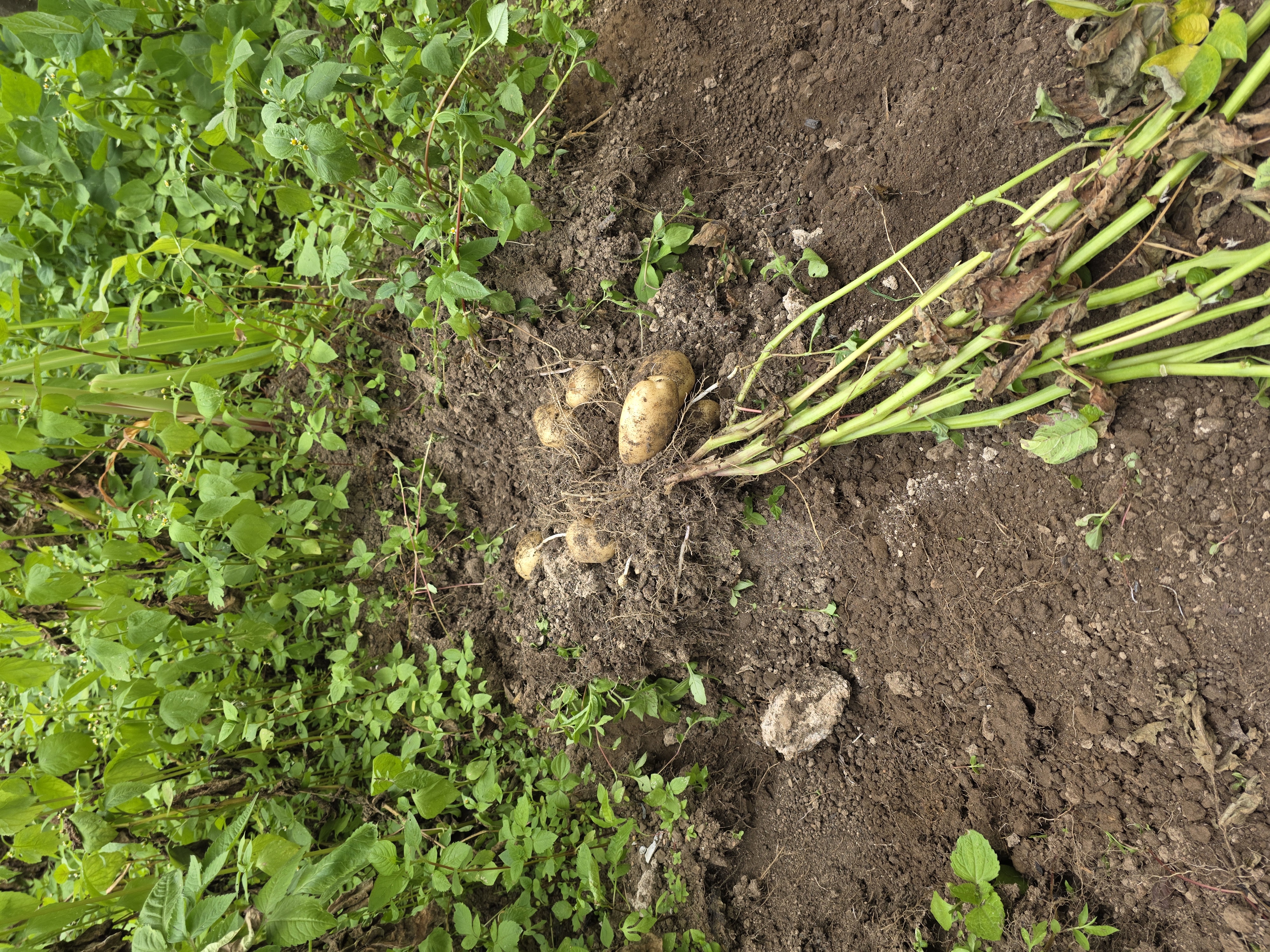
The Dig
Lift the plant and the harvest comes with it: clusters of clean, pale tubers clinging to the roots, fresh from soil worked by hand.
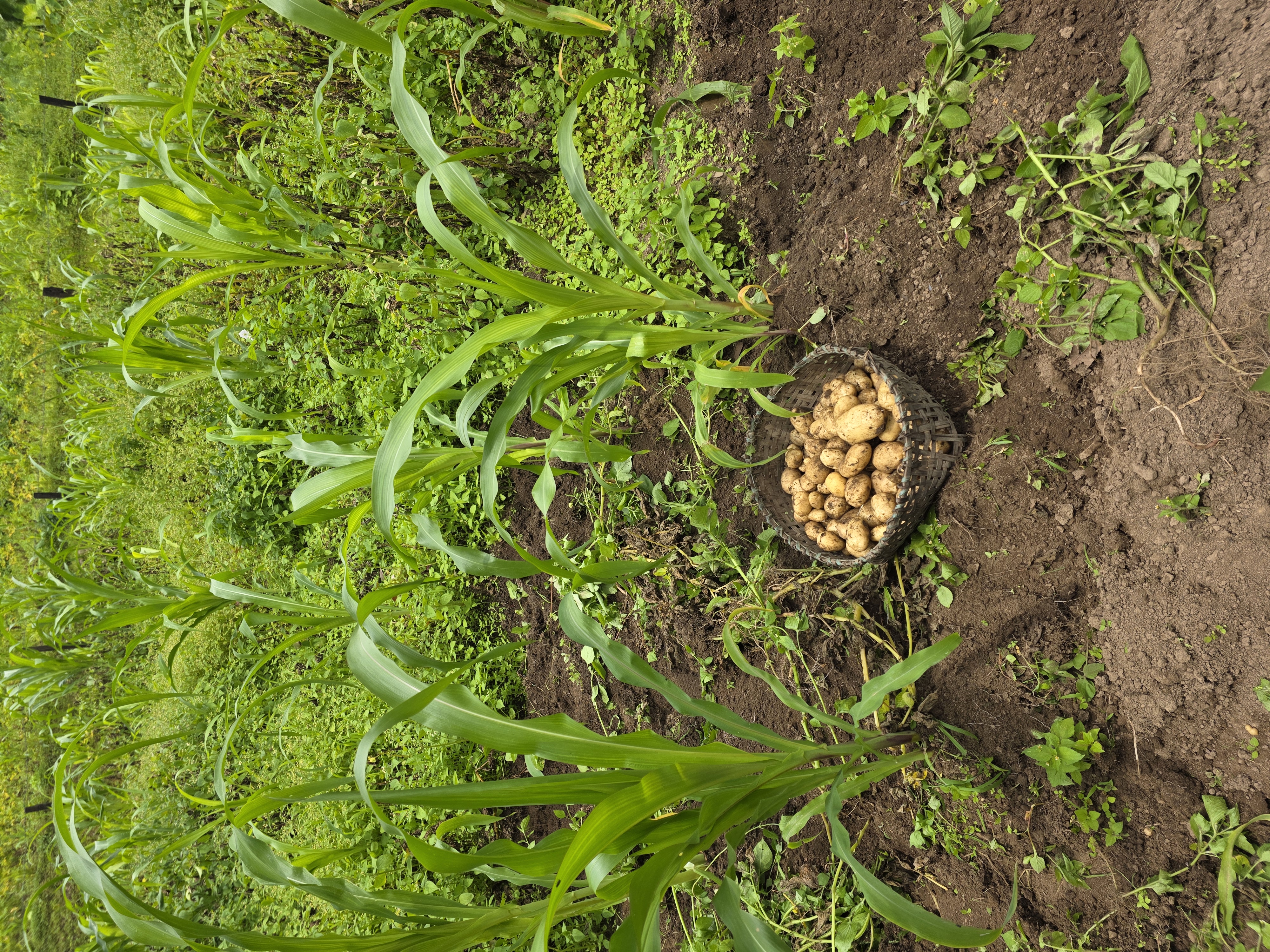
The Basket
Gathered between rows of maize, the day's haul rests in a single woven basket, enough for the kitchen, the neighbours, and the market.
Coffee from the Ridge
Grown in the shade of the hills, Viswema's coffee is cultivated by hand, from the plantation slopes to the bright red fruit to the final harvest that makes its way into cups far beyond Nagaland.
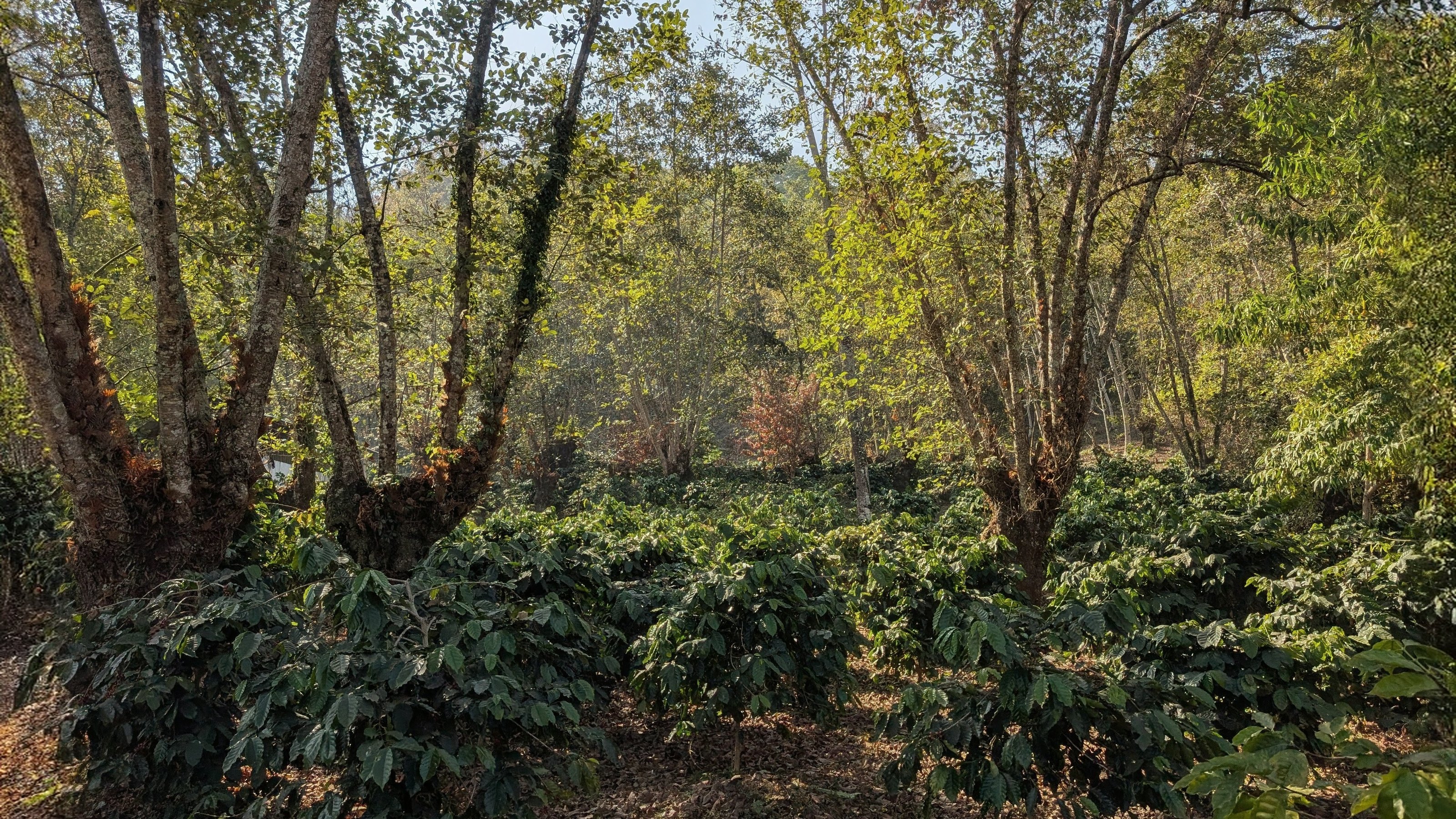
The Plantation
Coffee bushes thrive in the shade of taller trees on Viswema's slopes, grown without chemicals, tended by families who know each plant by sight.
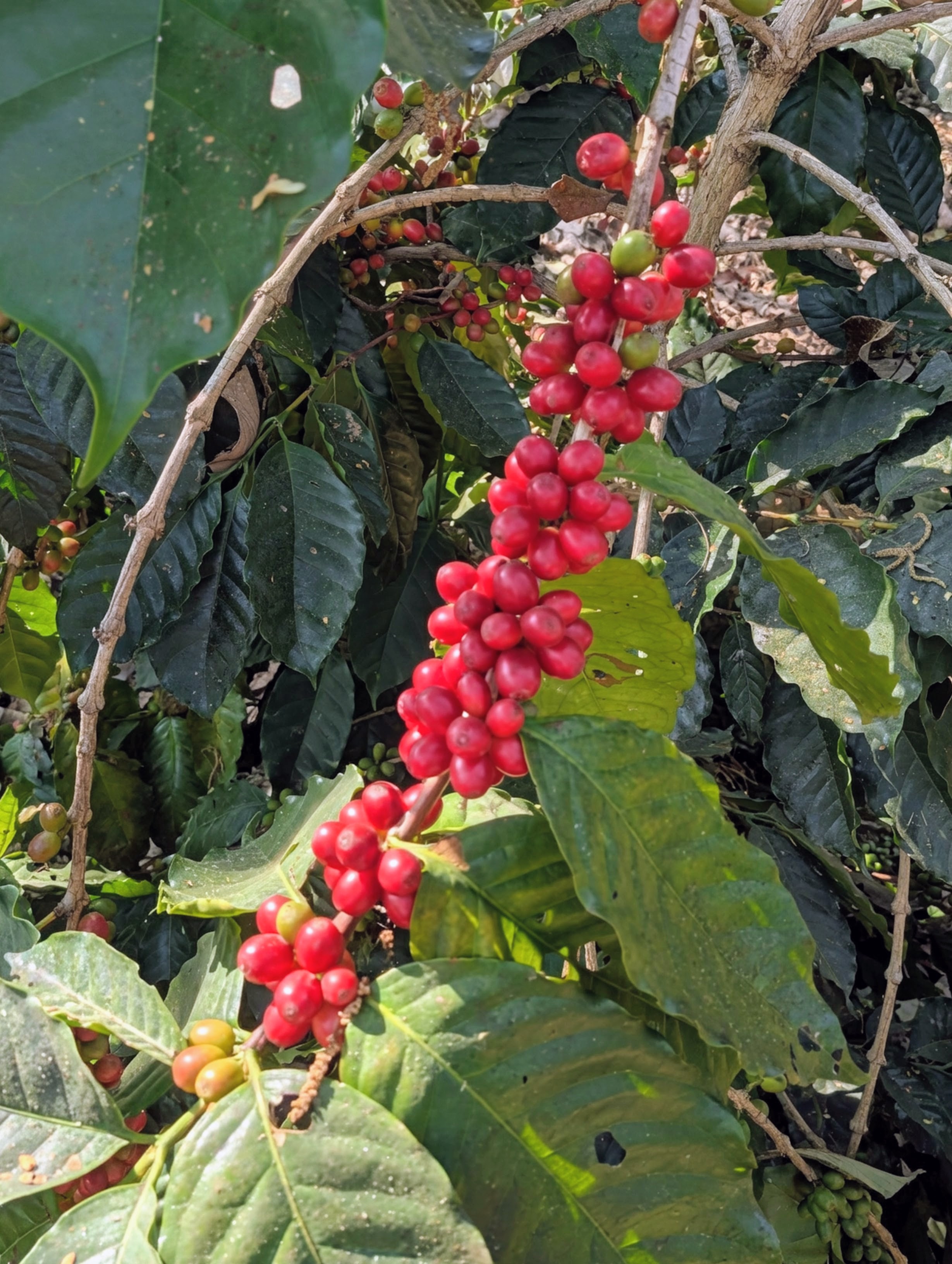
The Fruit
Bright red cherries signal harvest time. Each one is picked by hand when perfectly ripe: no machines, just patience and practiced eyes.
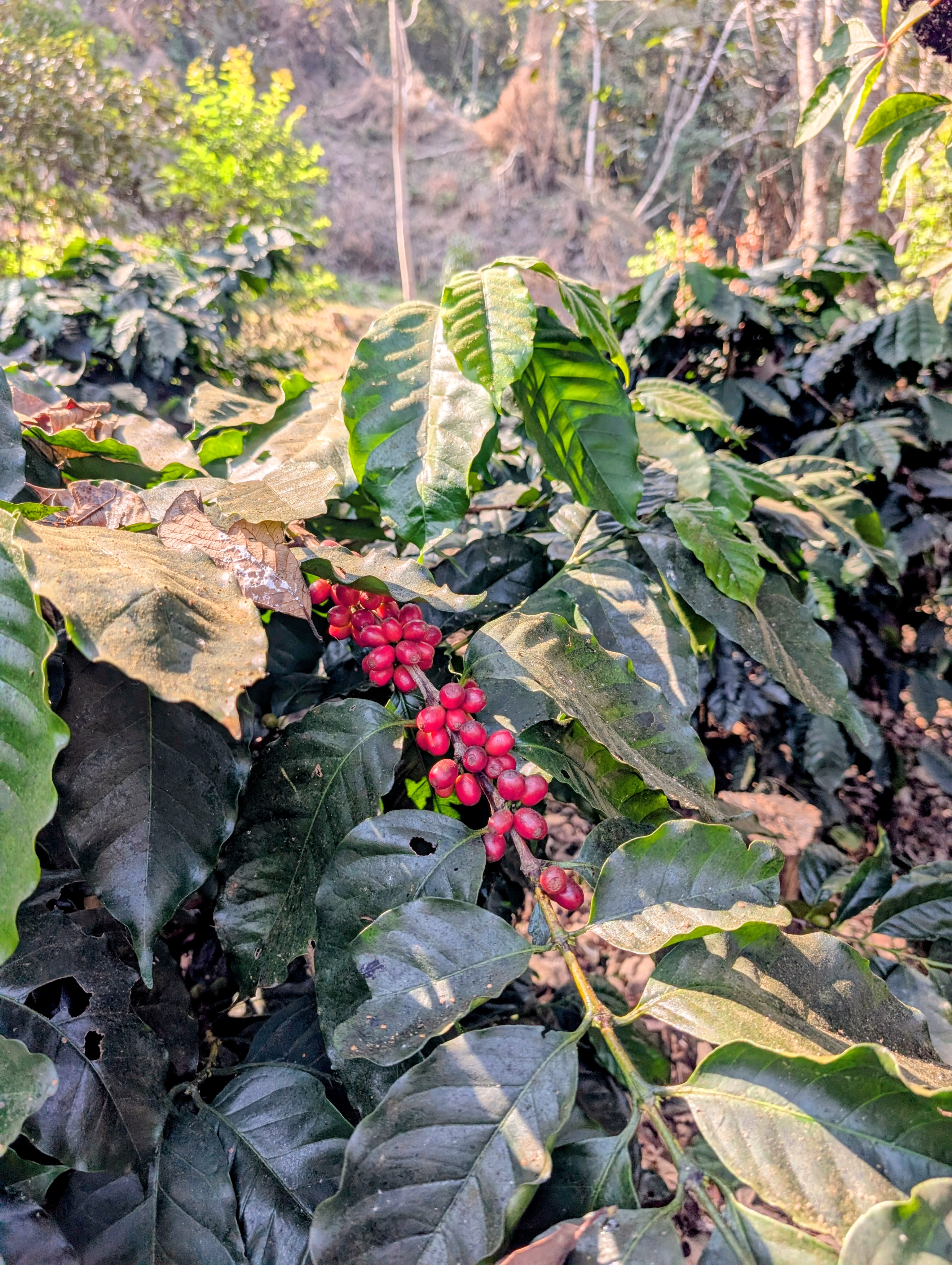
Ripening
Green to red, the cherries colour slowly through the season, each cluster turning at its own pace on the shaded hillside.
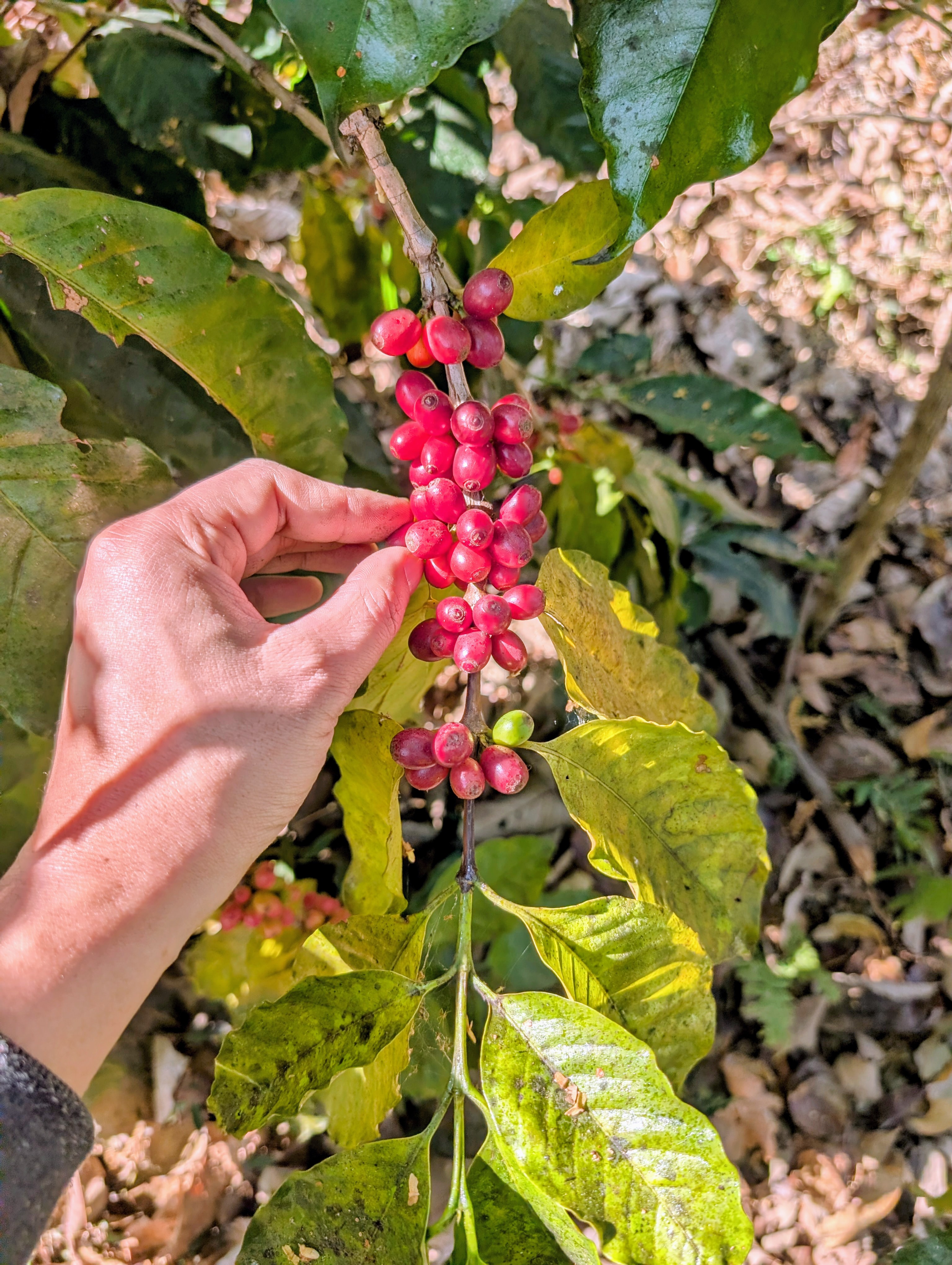
The Harvest
Picked one by one, by hand. The harvest carries the altitude and cool air of these hills into every cup.
Explore
Walk the ridgeline,
touch the past
From high-altitude treks to ancient stone sites, Viswema offers experiences rooted in the land and its history. Every trail has a story; every stone marks a memory.
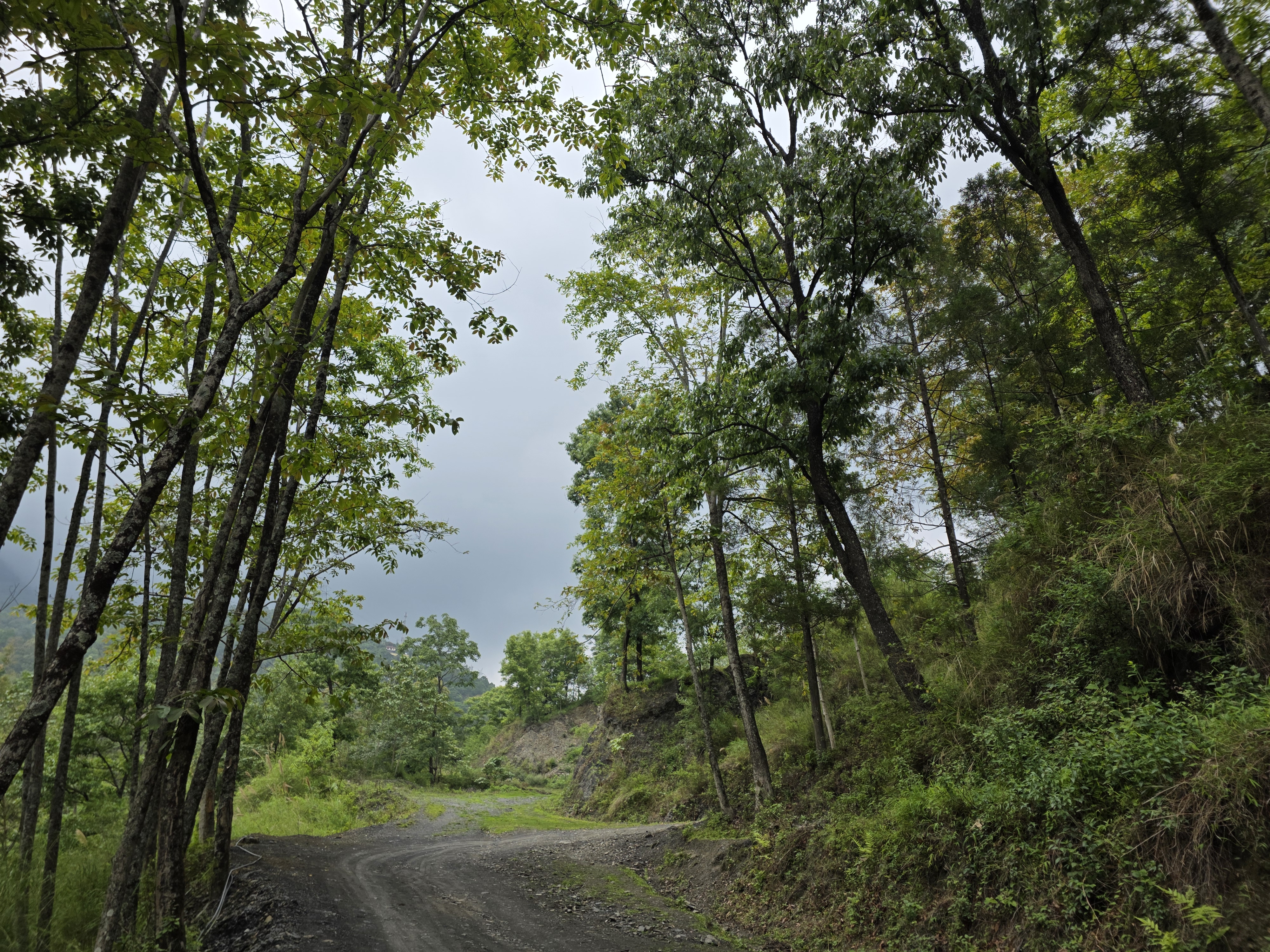
Forest Trails
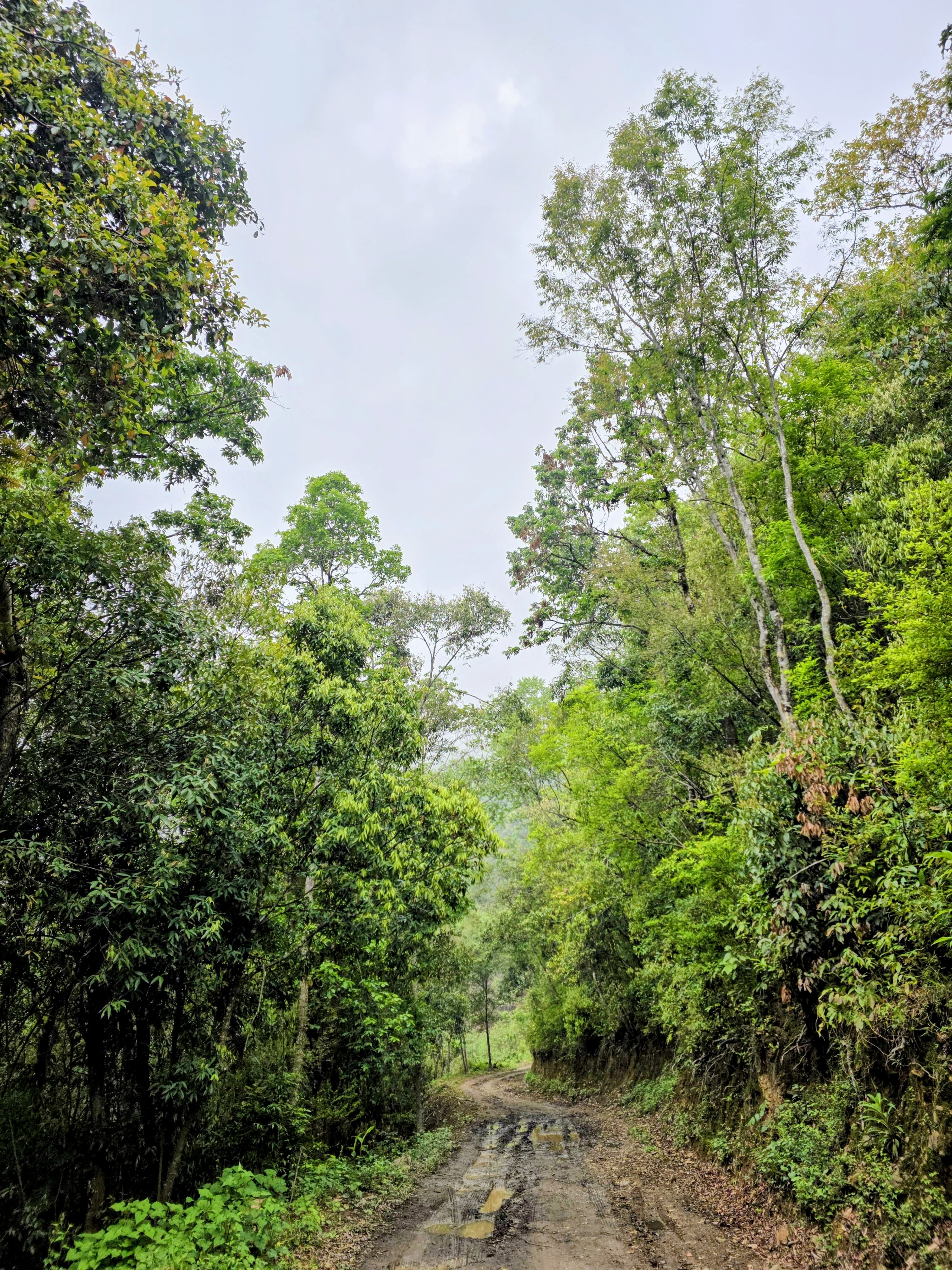
Beyond the village edge, dirt tracks slip into the forest. Quiet walks under the canopy, the air cooler, the only sound the wind in the leaves.
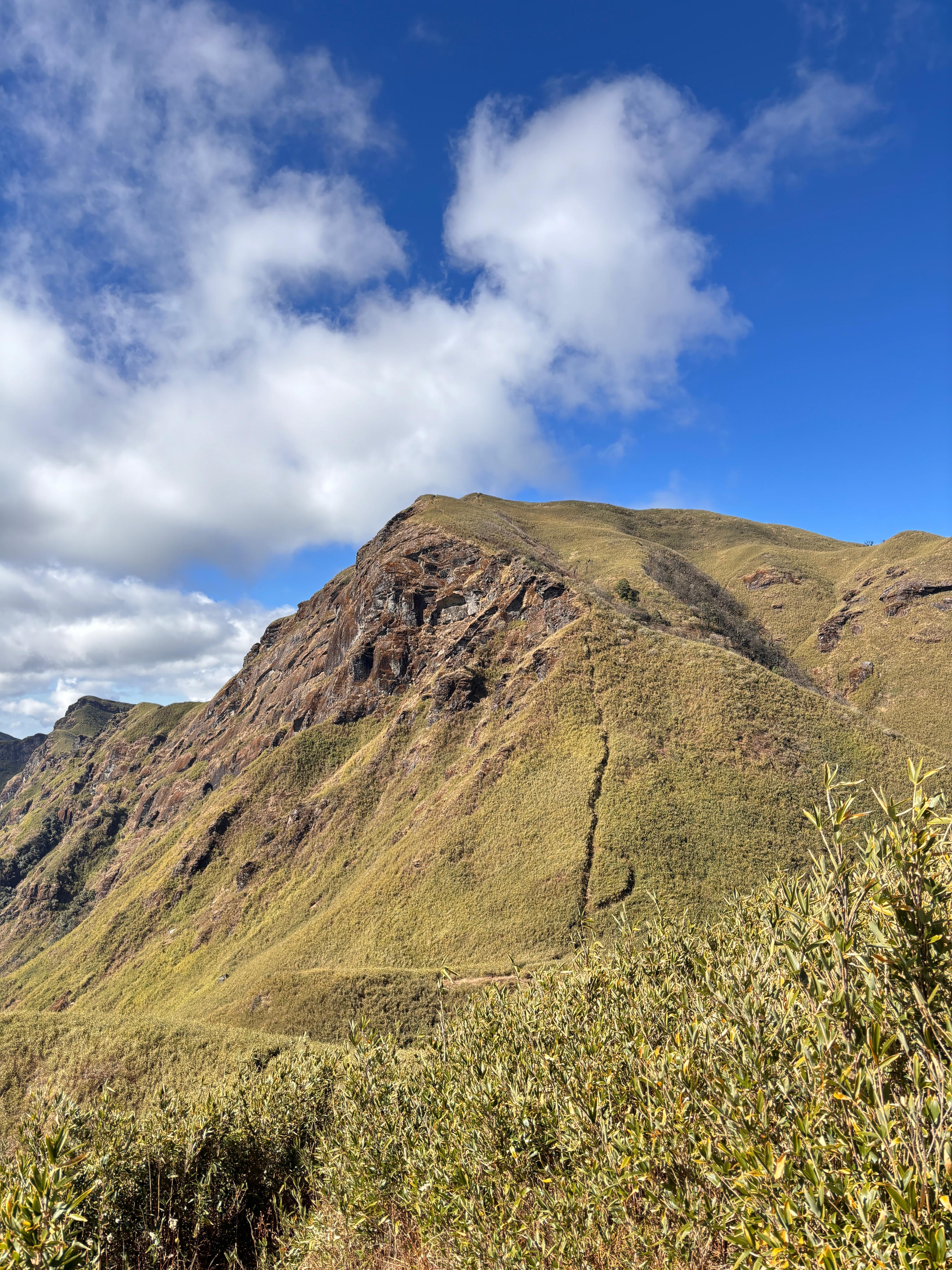
Mount Tempü
A prominent peak south of the village, a half-day climb through shaded forest and open ridge — best followed step by step.
The Climb to Mt. Tempü
It begins gently and never quite stays that way. The path leaves the village, leans into the hill, and settles into the long rhythm of the ascent.
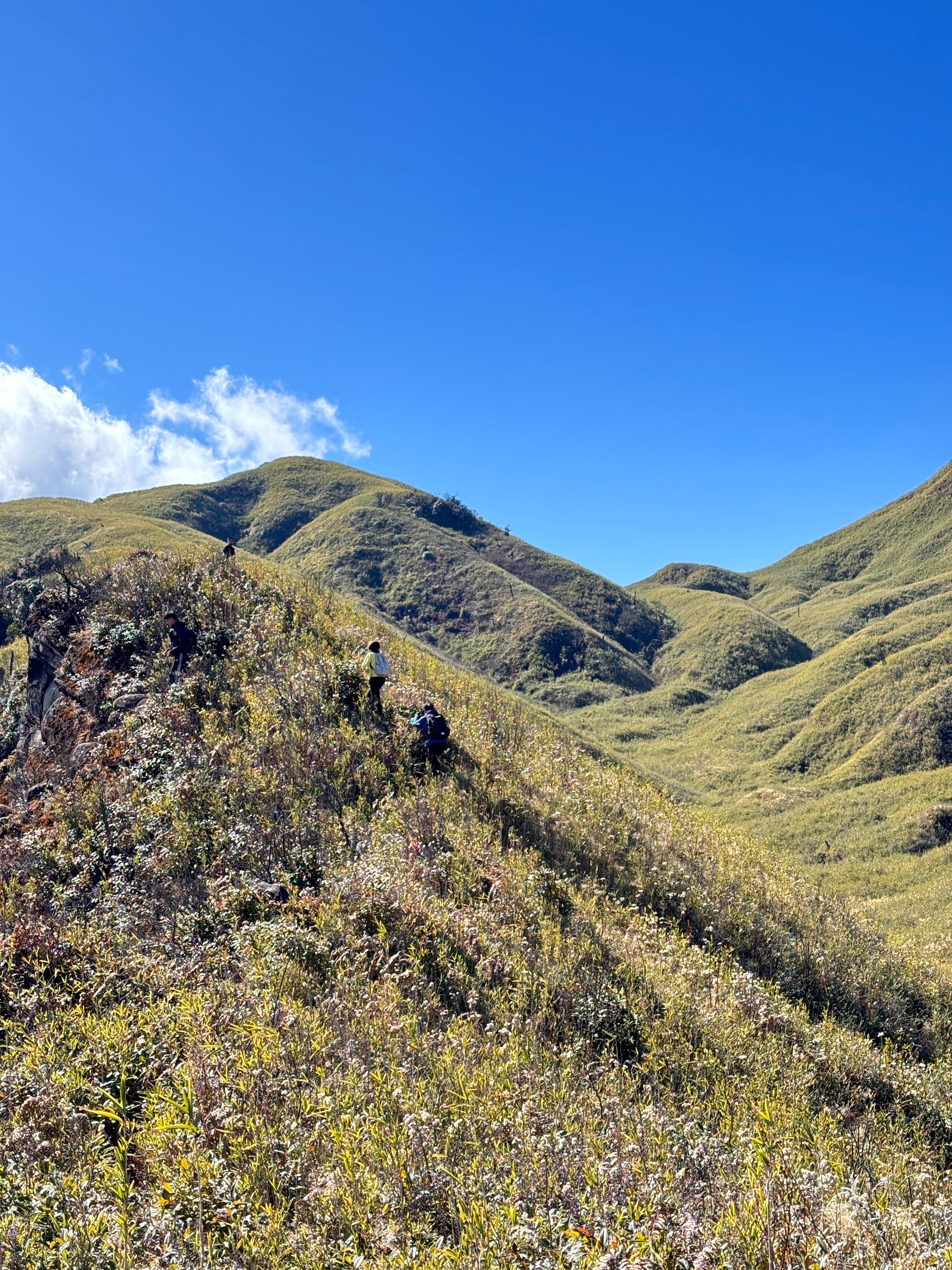
Always Upwards
The trail asks for patience. Switchback after switchback, the village shrinks below and the ridgeline draws slowly closer.
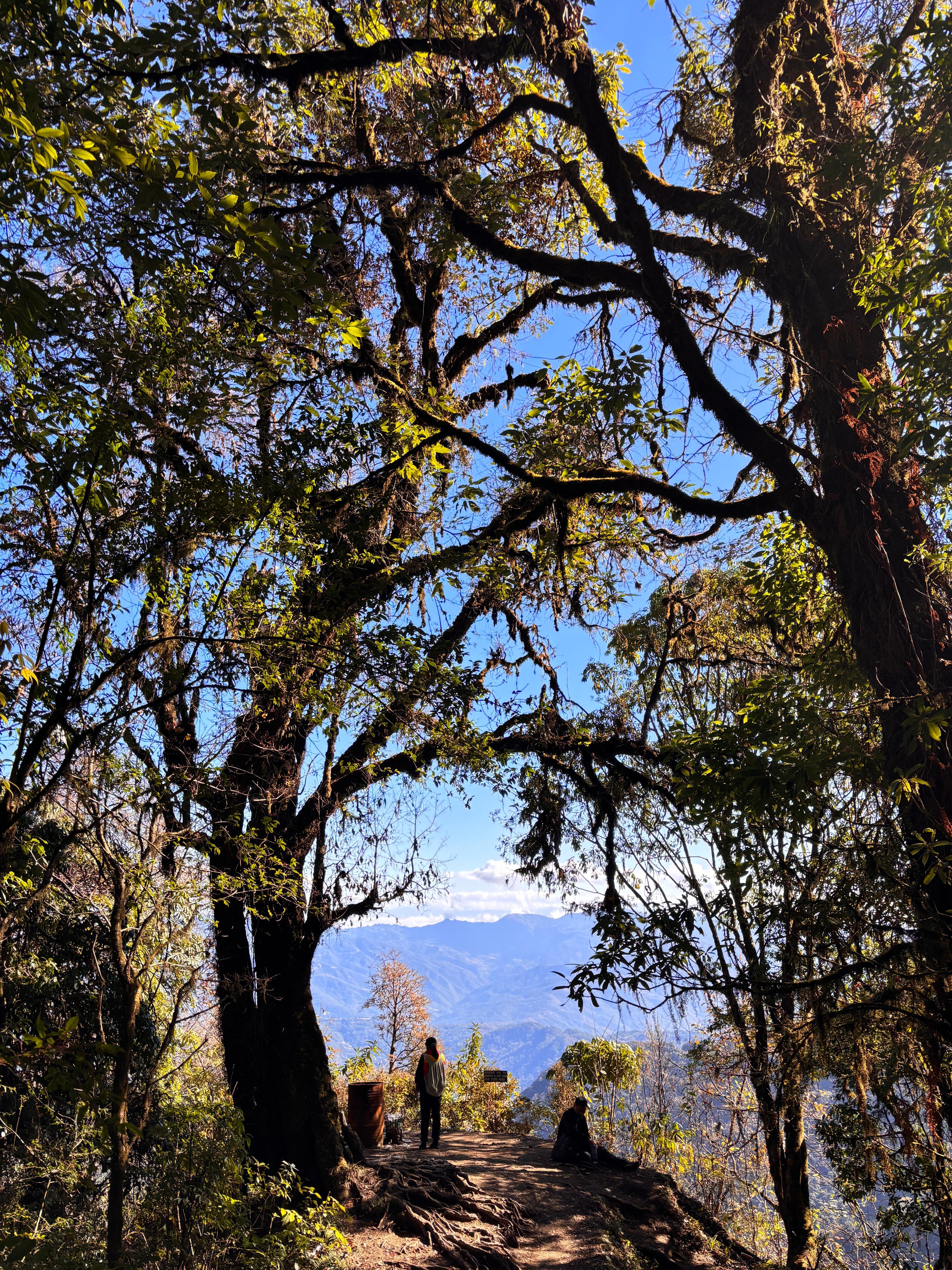
A Pause in the Shade
Halfway up, a stand of trees offers cool ground to sit. Packs come off, breath returns, and the climb feels possible again.
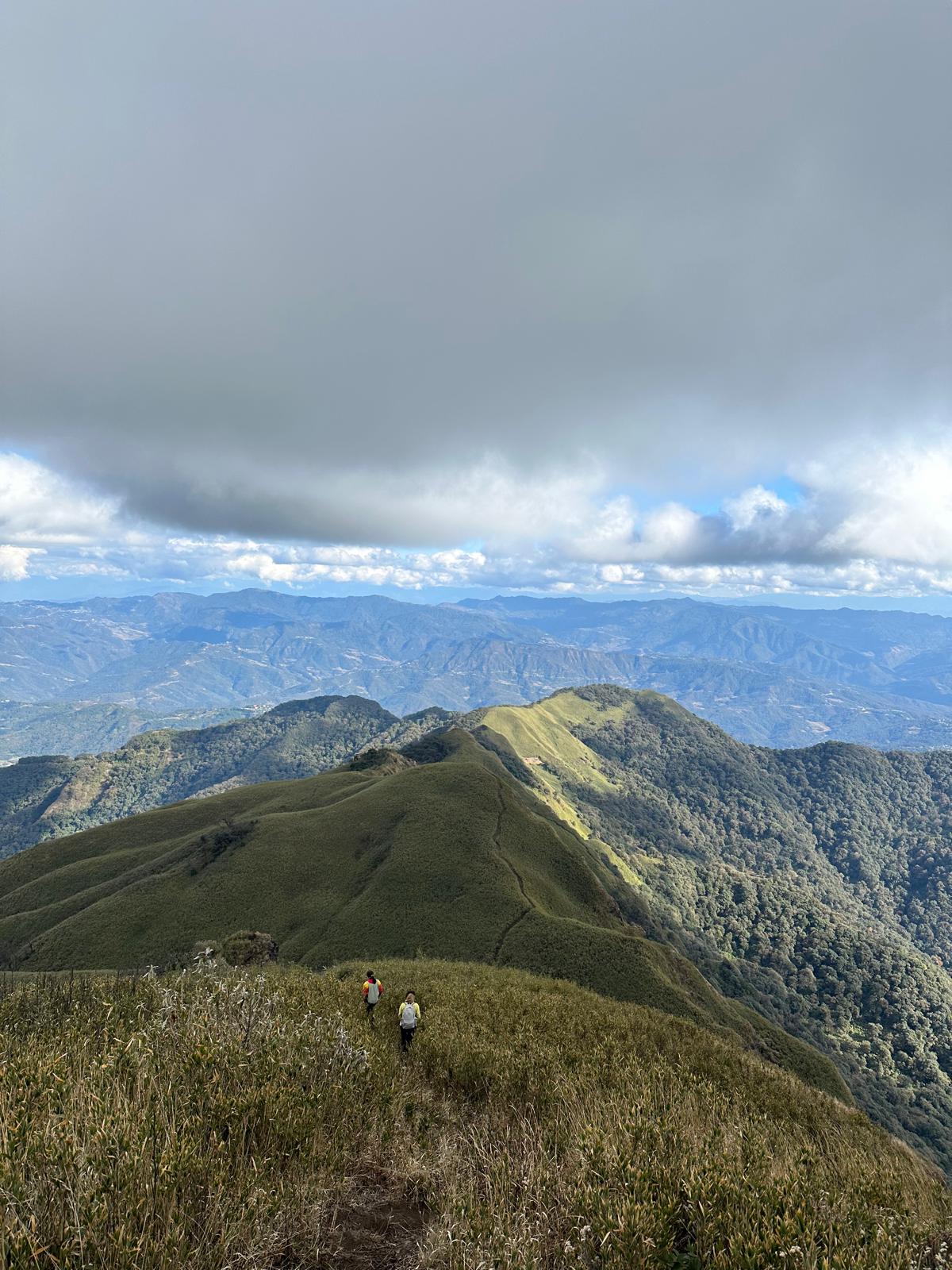
The Walk Down
Then the long descent. The trail unwinds back toward the village, the summit already softening into memory behind every step.
What the Heights Give Back
The effort buys more than the summit. All along the way, and most of all from the top, the land puts on a show of light and distance.
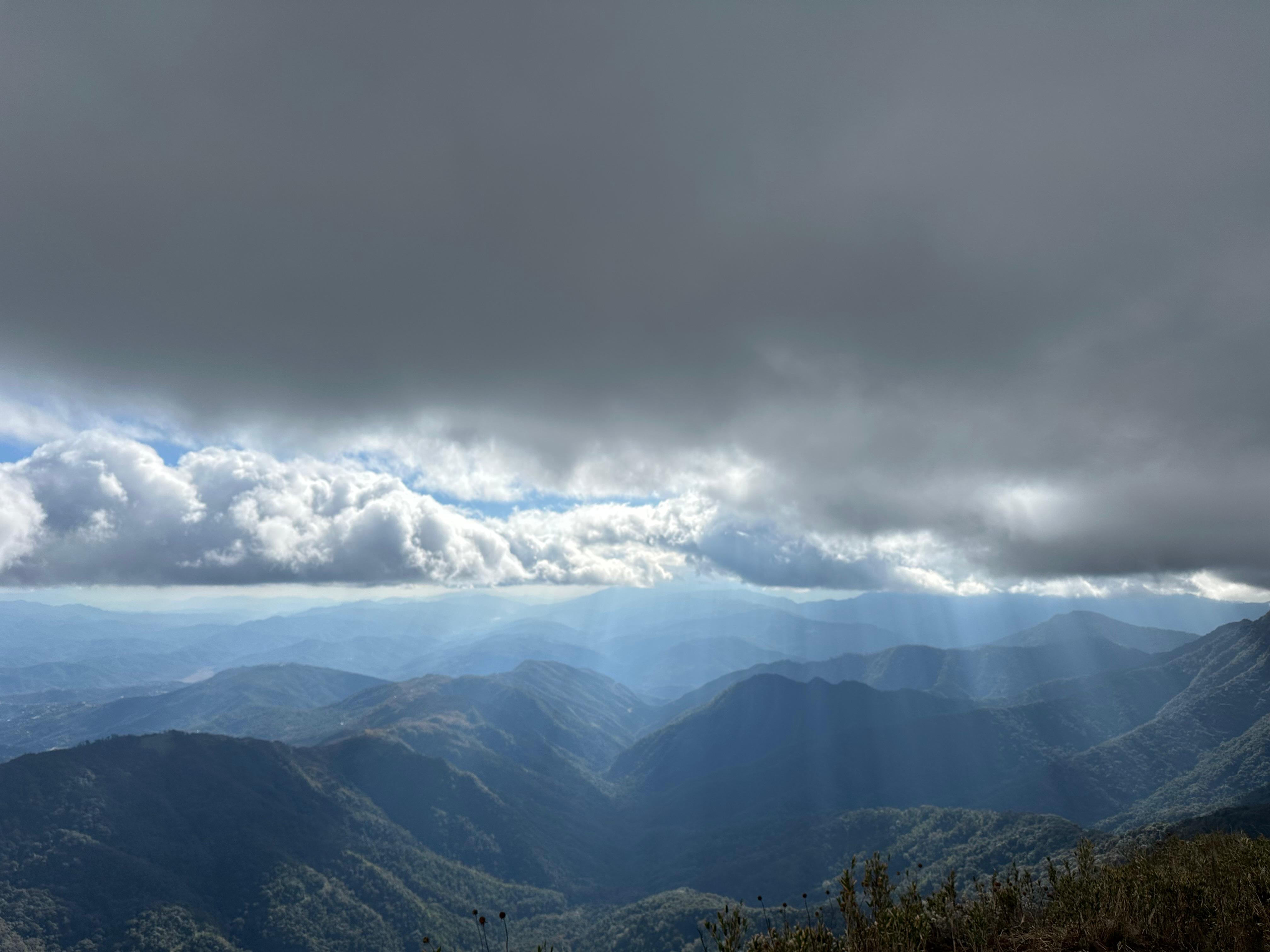
Light Through the Clouds
Partway up, the weather turns theatrical. Sun breaks through drifting cloud, throwing shafts of light across the ridges.
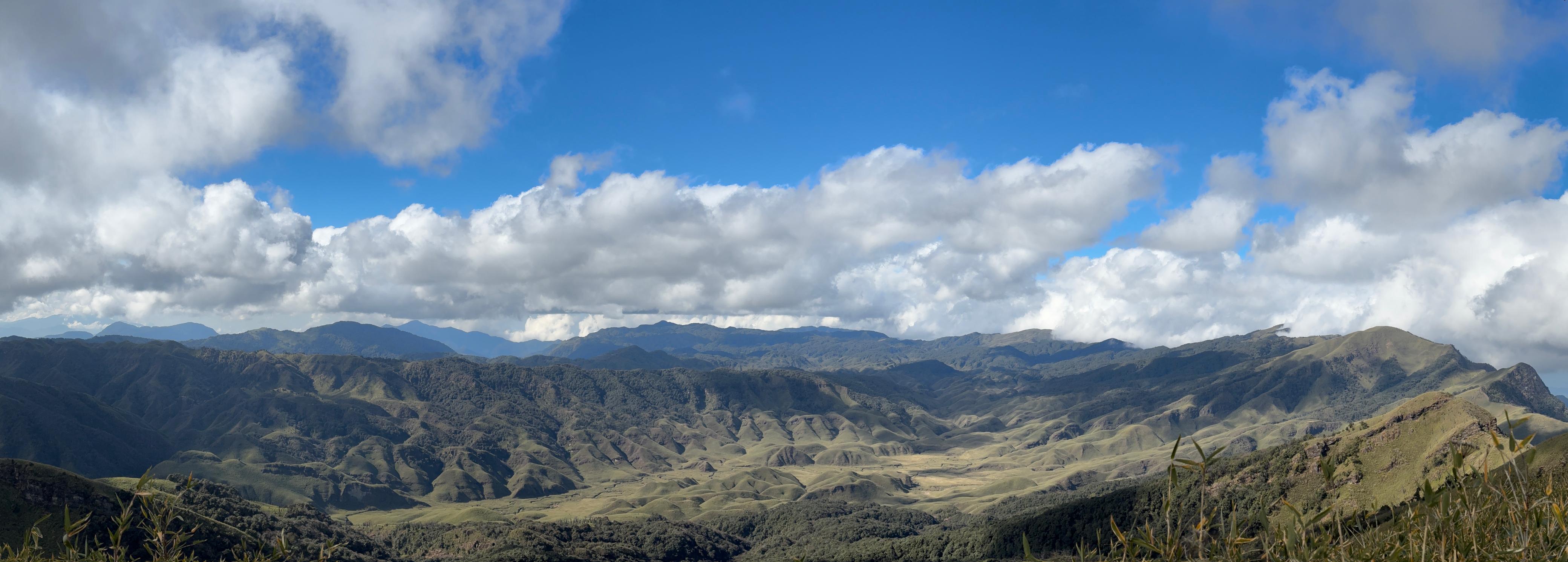
The Reward
From the top, the land falls away in every direction — ridge after ridge of green, the Dzükou valley spread wide on the horizon.
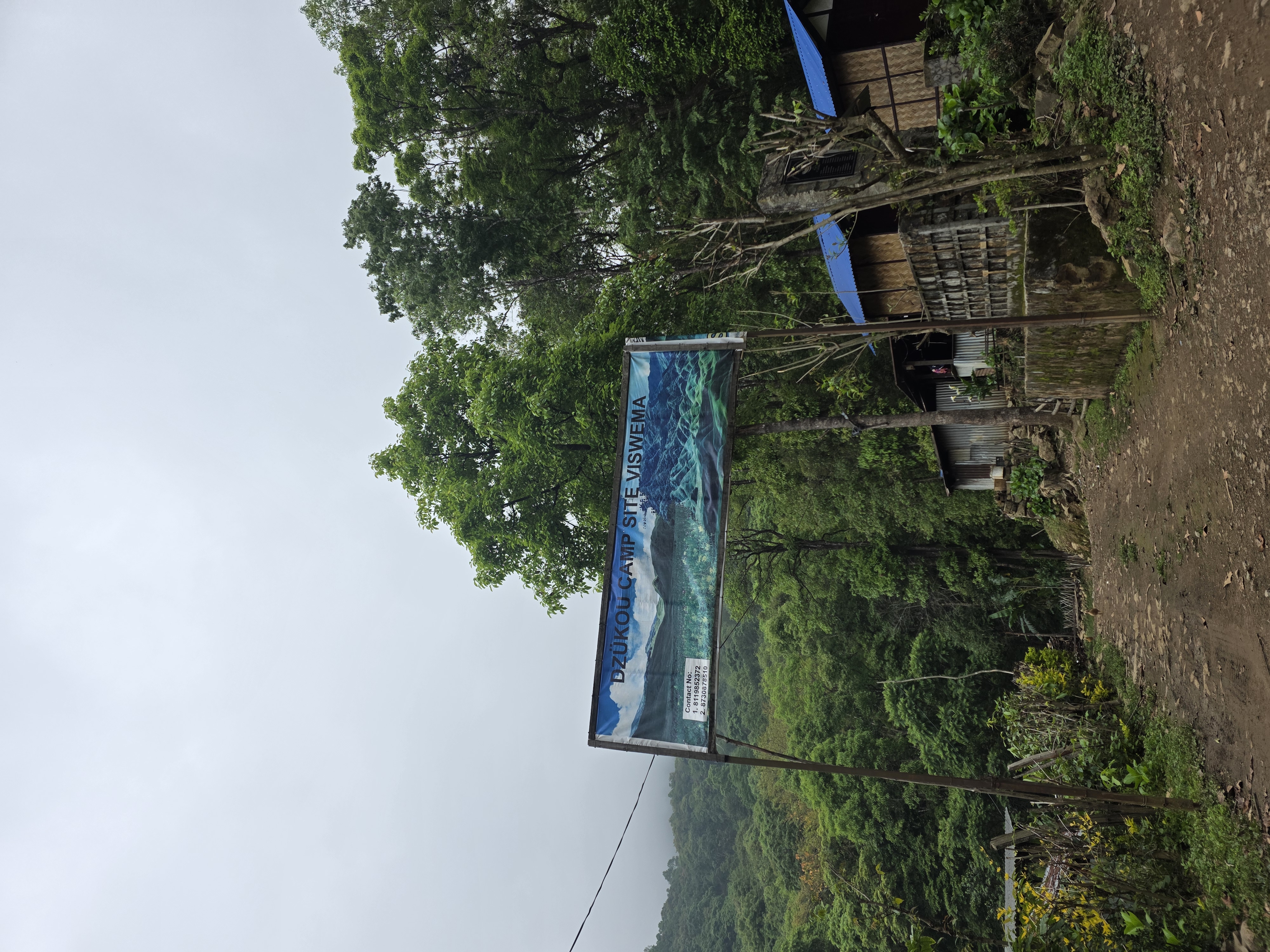
Dzükou Valley
Just east of Viswema lies Dzükou Valley, a high alpine grassland famed for its seasonal wildflowers and rolling green meadows. The trail from Viswema is one of the main approaches, climbing through pine forest and bamboo before opening onto the valley's hidden basin.
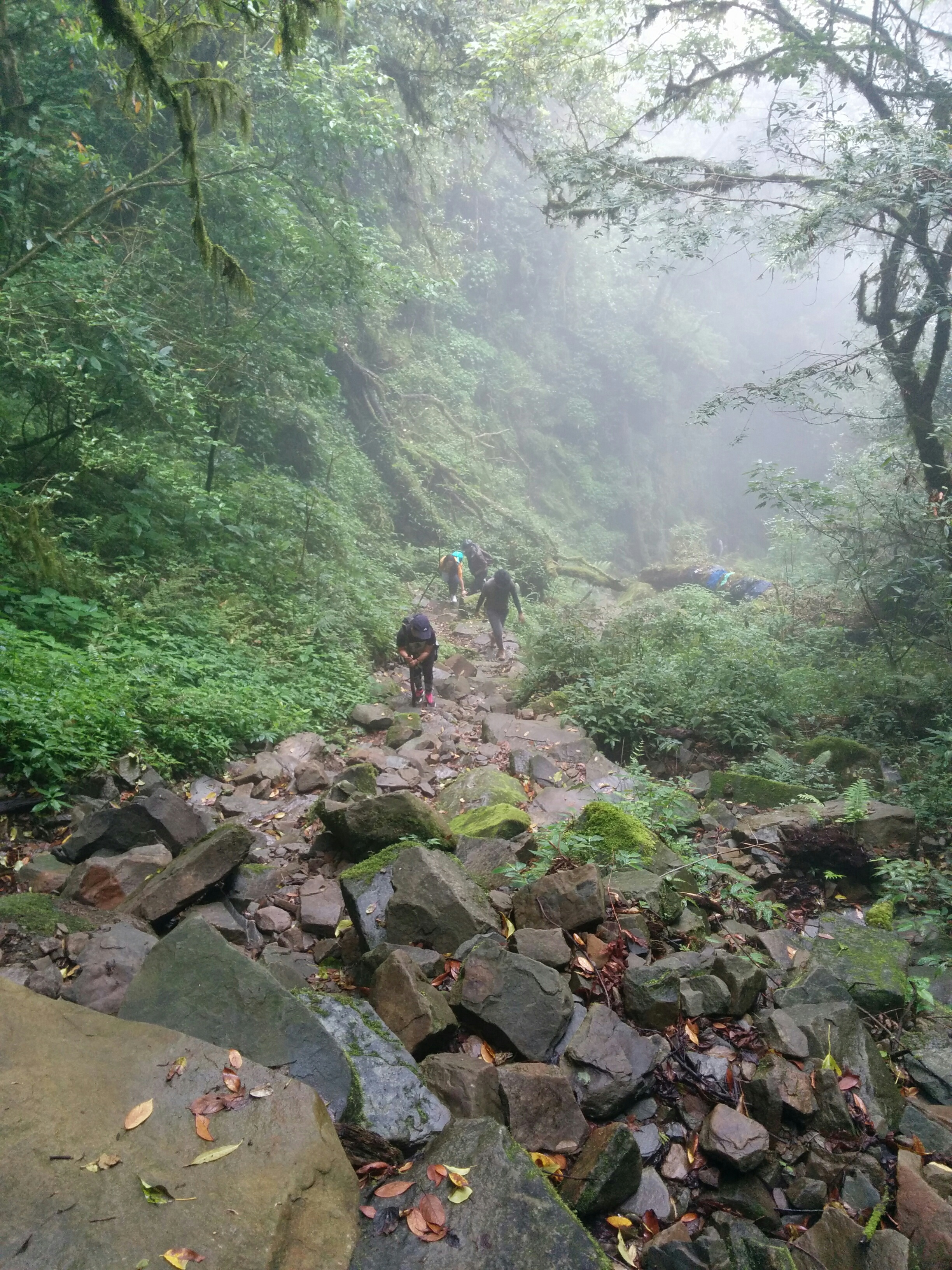
The Climb Begins
The trail rises almost immediately. Earth and stone steps cut into the hillside, switchbacks twisting up through dense pine and bamboo.
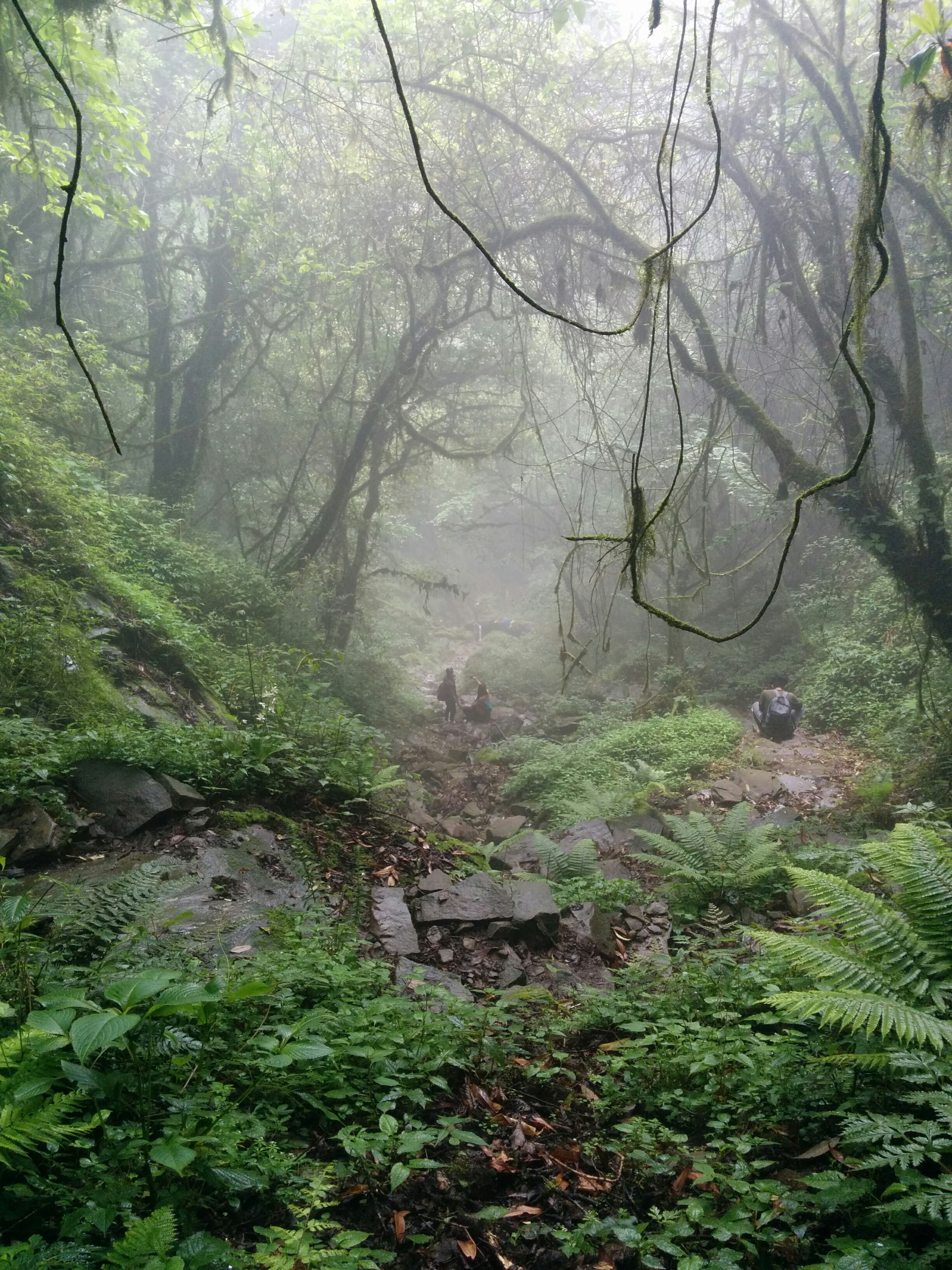
The Killer Climb
The grade only sharpens. Trekkers call this stretch the killer climb, a long, lung-burning ascent that earns every metre of the valley above.
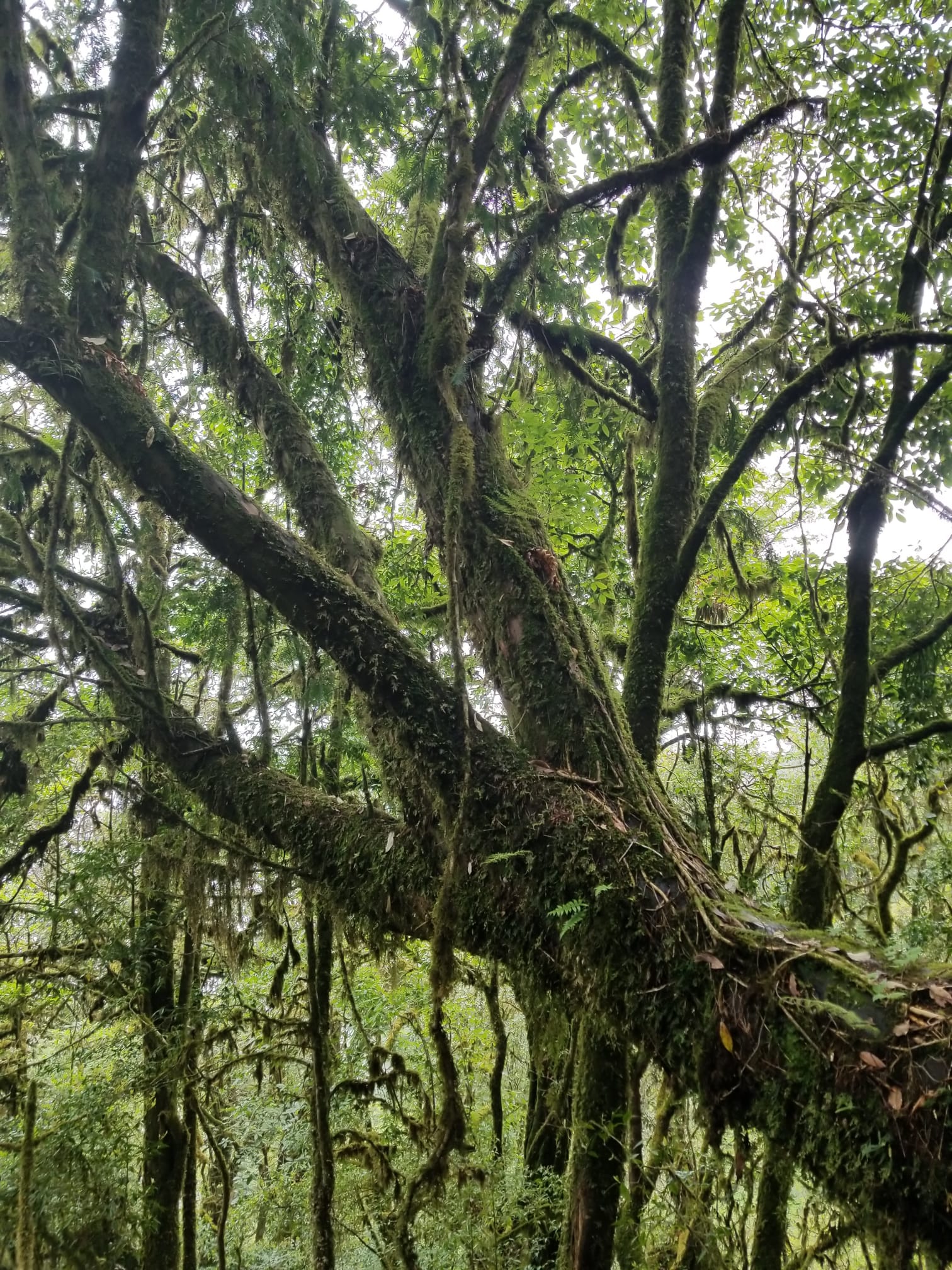
Through the Undergrowth
The trail narrows as the forest closes in. Ferns and bamboo press against the path, the way ahead threading quietly through the green.
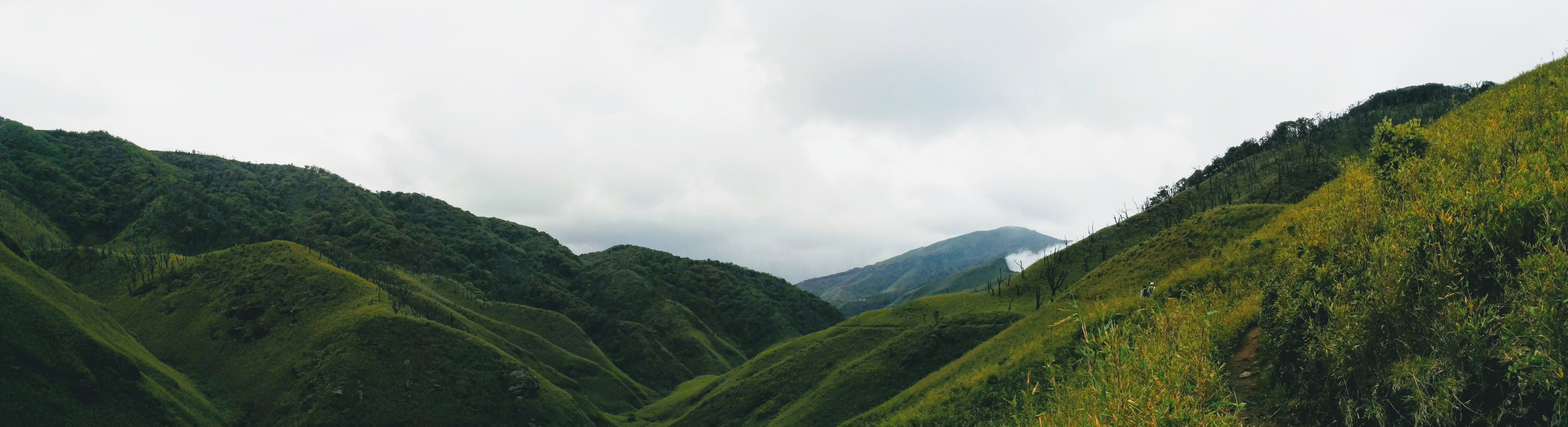
After the Climb
The forest finally thins and the gradient eases. A pause to breathe, packs off, with the rim of the valley waiting just beyond the rise.
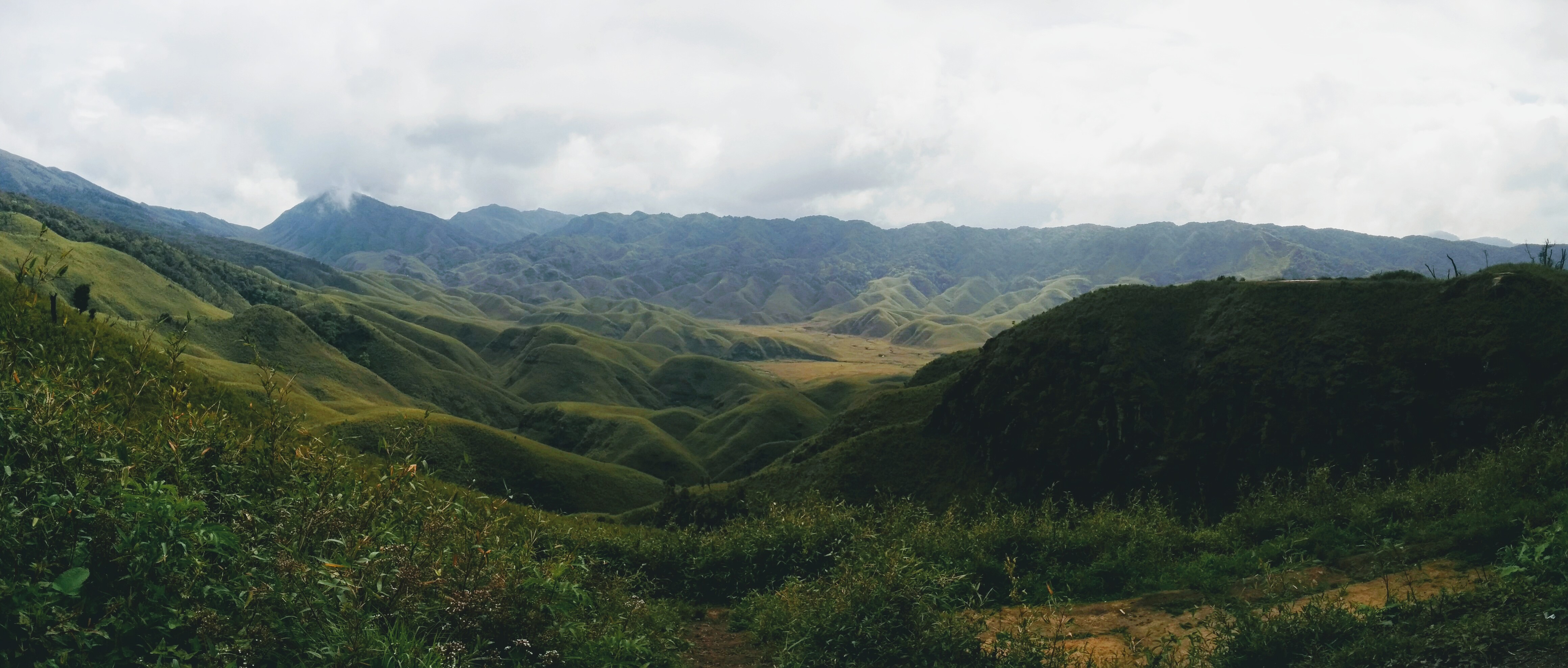
The Valley
And then the basin opens. Rolling green meadows of dwarf bamboo, ringed by quiet hills. In summer, the rare Dzükou lily blooms in soft pink across the valley floor.
Stay & Trek
Hosts on the
ridge
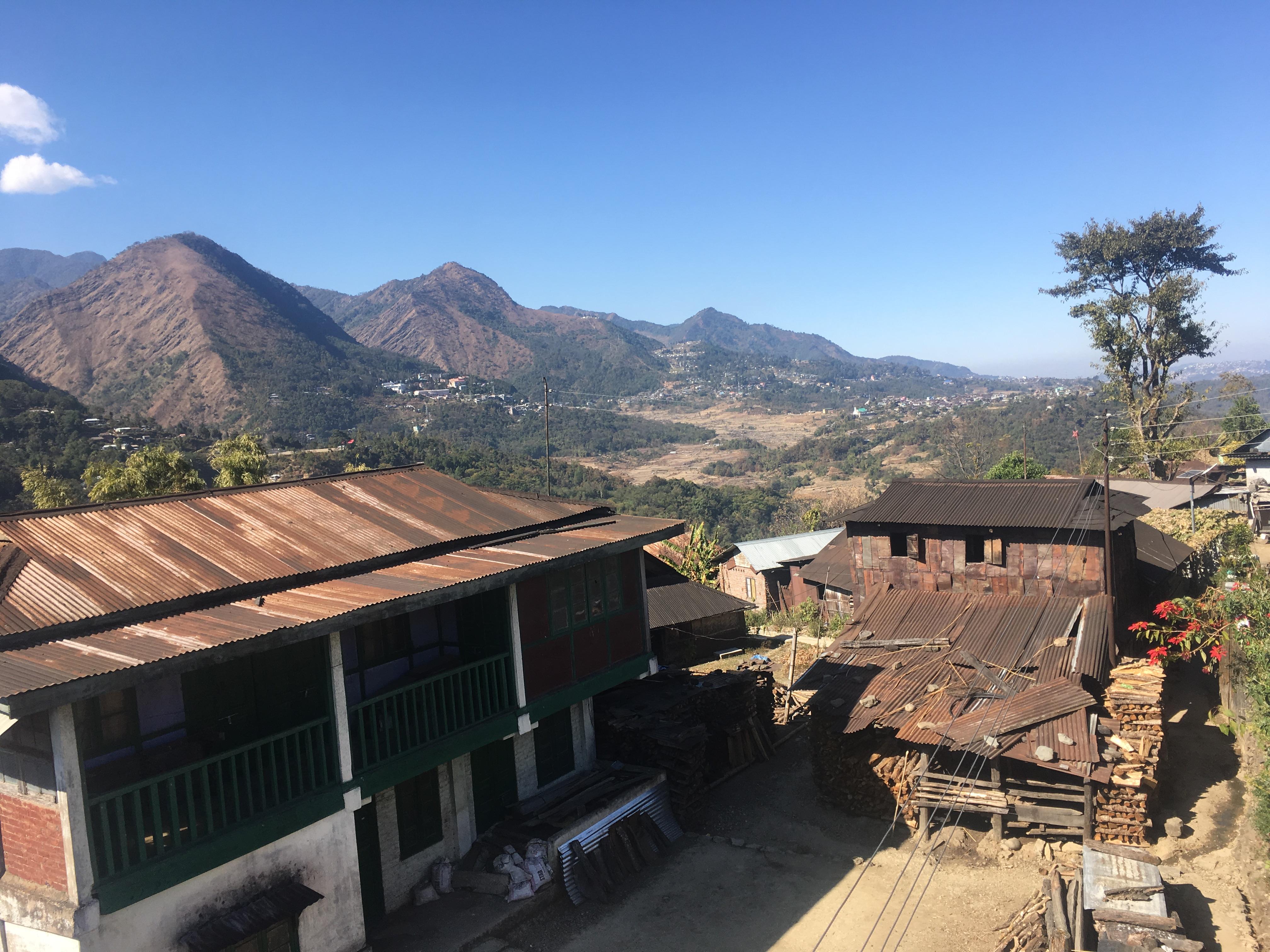
Homestay
Stay with a local family and experience village life firsthand. Wake to roosters and woodsmoke, share meals around the hearth, and watch the valley fill with mist at dawn. Viswema's homestays are simple but warm, offering an intimacy no hotel can match.
Dzükou Hiking Guide
The trail to Dzükou Valley begins at the Viswema entry, climbing steeply through pine and bamboo before opening onto the alpine basin. Local guides can lead the way, share what grows along the trail, and make the trek safer and richer.
Information for both arrangements will be available here soon.
Getting There
The road
to Viswema
From Kohima
~20 km south along NH-2. About 45 minutes by road.
From Dimapur Airport
The nearest airport, ~90 km away. Drive to Kohima, then continue south to Viswema.
From Dimapur Railway Station
The nearest railhead. Shared taxis and buses to Kohima run frequently.